Google Authenticator

Google Authenticator

If you set up 2-Step Verification, you can use the Google Authenticator app to receive codes. You can still receive codes without internet connection or mobile service. Learn more about 2-Step Verification.

1- Android

App requirements

To use Google Authenticator on your Android device, you need:

Download Authenticator

INSTALL GOOGLE AUTHENTICATOR

Set up Authenticator

  1. On your Android device, go to your Google Account.
  2. At the top, tap the Security tab.
    If at first you don’t get the Security tab, swipe through all tabs until you find it.
  3. Under “Signing in to Google,” tap 2-Step Verification. You may need to sign in.
  4. Under “Authenticator app,” tap Set up.
    On some devices, under “Authenticator app,” tap Get Started.
  5. Follow the on-screen steps.

Get codes on new phone

Transfer Google Authenticator codes to new phone

To transfer Authenticator codes to a new phone, you need:

  • Your old Android phone with Google Authenticator codes
  • The latest version of the Google Authenticator app installed on your old phone
  • Your new phone
  1. On your new phone, install the Google Authenticator app.
  2. In the Google Authenticator app, tap Get Started.
  3. At the bottom, tap Import existing accounts?
  4. On your old phone, create a QR code:
    1. In the Authenticator app, tap More More and then Transfer accounts and then Export accounts.
    2. Select the accounts you want to transfer to your new phone. Then, tap Next. If you transfer more than one account, your old phone may create more than one QR code.
  5. On your new phone, tap Scan QR code.

After you scan your QR codes, you get confirmation that your Authenticator accounts transferred.

Tip: If your camera can’t scan the QR code, there may be too much information. Try to export again with fewer accounts.

Change which phone to send Authenticator codes

  1. On your Android device, go to your Google Account.
  2. At the top, tap Security.
  3. Under “Signing in to Google,” tap 2-Step Verification. You may need to sign in.
  4. Under “Available second steps,” find “Authenticator app” and tap Change Phone.
  5. Follow the on-screen steps.

Common issues

Fix an incorrect code

If your code is incorrect, confirm:

  • You entered the code before it expired.
  • The time on your device is correct for your local time zone.

If your code is still incorrect, sync your Android device:

  1. On your Android device, open the Google Authenticator app Authenticator.
  2. In the top right, select More More and thenTime correction for codes and then Sync now.
  3. On the next screen, the app confirms the time is synced. You can use your verification codes to sign in.
    • The sync only affects the internal time of your Google Authenticator app. Your device’s Date & Time settings won’t change.

Use Authenticator on multiple accounts or devices

Set up 2-Step Verification for multiple accounts

Authenticator can issue codes for multiple accounts from the same mobile device. Each Google Account must have a different secret key.

To set up extra accounts:

  1. Turn on 2-Step Verification for each account. Learn more about 2-Step Verification.
  2. Use the same Authenticator app for each account.

Set up Google Authenticator on multiple devices

To get verification codes on more than one device:

  1. On the devices you want to use, make sure you install Authenticator.
  2. In your Google Account, go to the 2-Step Verification section.
  3. If you already have Authenticator for your account, remove that account from Authenticator.

Important: Before you remove an account from Authenticator, make sure you have a backup. Learn more about backup codes.

  1. To set up 2-Step Verification for the Authenticator app, follow the steps on screen. Use the same QR code or secret key on each of your devices. Learn more about 2-Step Verification.
  2. To check that the code or key works, make sure the verification codes on every device are the same.


2- iPhone & iPad (iOS)

App requirements

To use Google Authenticator on your iPhone, iPod Touch, or iPad, you need:

Tip: If you have an iPhone 3G or up, to use Authenticator, you can scan a QR code.

Download Authenticator

INSTALL GOOGLE AUTHENTICATOR

Set up Authenticator

  1. On your iPhone or iPad, go to your Google Account.
  2. At the top, tap Security.
  3. Under “Signing in to Google,” tap 2-Step Verification. You may need to sign in.
  4. Under “Add more second steps to verify it’s you,” find “Authenticator app” and tap Set up.
  5. Follow the on-screen steps.

Get Google Authenticator codes on a new phone

Transfer Authenticator codes to a new phone

You need:

  • Your old iPhone with Authenticator codes
  • The latest version of the Google Authenticator app installed on your old phone
  • Your new phone
  1. On your new phone, install the Google Authenticator app.
  2. In the app, tap Get Started.
  3. At the bottom, tap Import existing accounts?.
  4. On your old iPhone, create a QR code:
    1. In the Authenticator app, tap More Export accounts Continue.
    2. Select the accounts you want to transfer to your new phone, then tap Export.
      • If you transfer multiple accounts, your old phone may create more than one QR code.
  5. On your new phone, tap Scan QR code.
  6. After you scan your QR codes, you get a confirmation that your Google Authenticator accounts  transferred. You can remove your exported accounts from your old phone.

Tip: If your camera can’t scan the QR code, it may be that there’s too much info. Try to export again with fewer accounts.

Change which phone to send Authenticator codes

  1. On your Android device, go to your Google Account.
  2. At the top, tap Security.
  3. Under “Signing in to Google,” tap 2-Step Verification. You may need to sign in.
  4. Under “Available second steps,” find “Authenticator app” and tap Change Phone.
  5. Follow the on-screen steps.

Use Authenticator on multiple accounts or devices

Set up 2-Step Verification for multiple accounts

Authenticator can issue codes for multiple accounts from the same mobile device. Each Google Account must have a different secret key.

To set up extra accounts:

  1. Turn on 2-Step Verification for each account. Learn more about 2-Step Verification.
  2. Use the same Authenticator app for each account.

Set up Google Authenticator on multiple devices

To get verification codes on more than one device:

  1. On the devices you want to use, make sure you install Authenticator.
  2. In your Google Account, go to the 2-Step Verification section.
  3. If you already have Authenticator for your account, remove that account from Authenticator.

Important: Before you remove an account from Authenticator, make sure you have a backup. Learn more about backup codes.

  1. To set up 2-Step Verification for the Authenticator app, follow the steps on screen. Use the same QR code or secret key on each of your devices. Learn more about 2-Step Verification.
  2. To check that the code or key works, make sure the verification codes on every device are the same.
Microsoft Authenticator

Microsoft Authenticator

You can set up an authenticator app to send a notification to your mobile device or to send you a verification code as your security verification method. You aren’t required to use the Microsoft Authenticator app, and you can select a different app during the set up process. However, this article uses the Microsoft Authenticator app.

Important: Before you can add your account, you must download and install the Microsoft Authenticator app. If you haven’t done that yet, follow the steps in the Download and install the app article.

Note: If the Mobile app option is grayed out, it’s possible that your organization doesn’t allow you to use an authentication app for verification. In this case, you’ll need to select another method or contact your administrator for more help.

Set up the Microsoft Authenticator app to send notifications

  1. On the Additional security verification page, select Mobile app from the Step 1: How should we contact you area.
  2. Select Receive notifications for verification from the How do you want to use the mobile app area, and then select Set up.Screenshot that shows the "Additional security verification" page, with "Mobile app" and "Receive notifications for verification" selected.

    The Configure mobile app page appears.

    Screen that provides the QR code

  3. Open the Microsoft Authenticator app, select Add account from the Customize and control icon in the upper-right, and then select Work or school account.

    Note: If you receive a prompt asking whether to allow the app to access your camera (iOS) or to allow the app to take pictures and record video (Android). select Allow so the authenticator app can access your camera to take a picture of the QR code in the next step. If you don’t allow the camera, you can still set up the authenticator app as described in Manually add an account to the app.

  4. Use your device’s camera to scan the QR code from the Configure mobile app screen on your computer, and then choose Next.
  5. Return to your computer and the Additional security verification page, make sure you get the message that says your configuration was successful, and then select Next. The authenticator app will send a notification to your mobile device as a test.Screenshot that shows the "Additional security verification" page, with the "Mobile app has been configured..." success message highlighted.
  6. On your mobile device, select Approve.
  7. On your computer, add your mobile device phone number to the Step 3: In case you lose access to the mobile app area, and then select Next. Microsoft recommends adding your mobile device phone number to act as a backup if you’re unable to access or use the mobile app for any reason.
  8. From the Step 4: Keep using your existing applications area, copy the provided app password and paste it somewhere safe.App passwords area of the Additional security verification page

    Note: For information about how to use the app password with your older apps, see Manage app passwords. You only need to use app passwords if you’re continuing to use older apps that don’t support two-factor verification.

  9. Select Done.

Set up the Microsoft Authenticator app to use verification codes

  1. On the Additional security verification page, select Mobile app from Step 1: How should we contact you?.
  2. Select Use verification code from the How do you want to use the mobile app area, and then select Set up.Screenshot that shows the "Additional security verification" page, with "Mobile app" and "Receive notifications for verification" selected.

    The Configure mobile app page appears.

    Screen that provides the QR code

  3. Open the Microsoft Authenticator app, select Add account from the Customize and control icon in the upper-right, and then select Work or school account.

    Note: If you receive a prompt asking whether to allow the app to access your camera (iOS) or to allow the app to take pictures and record video (Android). select Allow so the authenticator app can access your camera to take a picture of the QR code in the next step. If you don’t allow the camera, you can still set up the authenticator app as described in Manually add an account to the app.

  4. Use your device’s camera to scan the QR code from the Configure mobile app screen on your computer, and then choose Next.
  5. Return to your computer and the Additional security verification page, make sure you get the message that says your configuration was successful, and then select Next. The authenticator app asks for a verification code as a test.Screenshot that shows the "Additional security verification" page, with the "Mobile app has been configured..." success message highlighted.
  6. From the Microsoft Authenticator app, scroll down to your work or school account, copy and paste the 6-digit code from the app into the Step 2: Enter the verification code from the mobile app box on your computer, and then select Verify.Additional security verification page, with verification code test
  7. On your computer, add your mobile device phone number to the Step 3: In case you lose access to the mobile app area, and then select Next. Microsoft recommends adding your mobile device phone number to act as a backup if you’re unable to access or use the mobile app for any reason.
  8. From the Step 4: Keep using your existing applications area, copy the provided app password and paste it somewhere safe.App passwords area of the Additional security verification page

    Note: For information about how to use the app password with your older apps, see Manage app passwords. You only need to use app passwords if you’re continuing to use older apps that don’t support two-factor verification.

  9. Select Done.
How Enzyme Finance Works

Enzyme Finance MLN cryptocurrency

Investors generally prefer more experienced institutions and individuals to handle their investments for them. As a result, one of the biggest markets in the traditional finance world is the asset management industry. As of 2021, there are approximately $112.3 trillion in global assets under management (AUM). With global wealth at $463.6 trillion, approximately 24.2% of all wealth is managed by the global asset management industry.

By comparison, the asset management industry for decentralized finance (DeFi) is quite small. Altogether, the decentralized asset management (Yield Aggregator and Indexes) has a total value locked (TVL) of $1.3 billion. Given that the total market cap of all of crypto is ~$909 billion, only about 0.15% of all crypto wealth is managed through decentralized asset management. In other words, decentralized asset management’s share of wealth is ~161x smaller than traditional finance’s share of wealth.

Although decentralized asset management is lagging far behind its traditional finance counterpart, there is certainly an investor base that wants exposure to DeFi and its yield. That investor base was previously serviced by a plethora of CeFi companies, such as Celsius, Voyager, BlockFi, etc., that gained popularity over the 2021 bull run. Part of their popularity was due to their relatively simple and convenient interfaces.  However easy-to-use these CeFi solutions were, they came with some complications in regard to their opaqueness and custodial nature.

Decentralized asset management may stand to benefit from CeFi’s failure. The recent FTX implosion has evaporated the trust of many users in centralized custodians. As such, decentralized non-custodial solutions are necessary to help regain the trust of so many that were negatively affected by FTX.  In decentralized asset management, users don’t have to worry about a custodian losing their crypto. Moreover, users can verify, on-chain, the health of the products they choose to invest their money in.

Although decentralized finance’s asset management industry may be small, numerous protocols and projects are working to scale the nascent industry. Enzyme is leading the charge as the largest on-chain active asset management platform by TVL.

Background

The private company behind Enzyme, Melonport AG, was founded in July 2016 as a privately domiciled company in Switzerland. Its founders, Mona El Isa and Reto Trinkler, aimed to develop an asset management protocol on Ethereum called Melon, the predecessor name for Enzyme.

Melon V1 went live in March 2019. It allowed users to create and invest in crypto structures through the use of smart contracts. Upon the launch of Melon V1, Melonport AG wound down and handed control of the Melon protocol to the community through the Melon Council, in an effort to decentralize the project. The Melon Council was a governing body initially selected by Melonport AG prior to its dissolution.

In December 2020, Melon Protocol announced that it would be rebranding to Enzyme. The Melon Council was additionally rebranded to the Enzyme Council. On Jan. 21, 2021, Enzyme V2 introduced new smart contract architecture and enabled new features such as lending and synthetic assets. In Q1 2022, Enzyme launched the latest release, Sulu, and deployed the protocol on Polygon.

How Enzyme Works

enzyme finance
enzyme finance
The Sveriges Riksbank Prize in Economic Sciences in Memory of Alfred Nobel 2022

The Sveriges Riksbank Prize in Economic Sciences in Memory of Alfred Nobel 2022

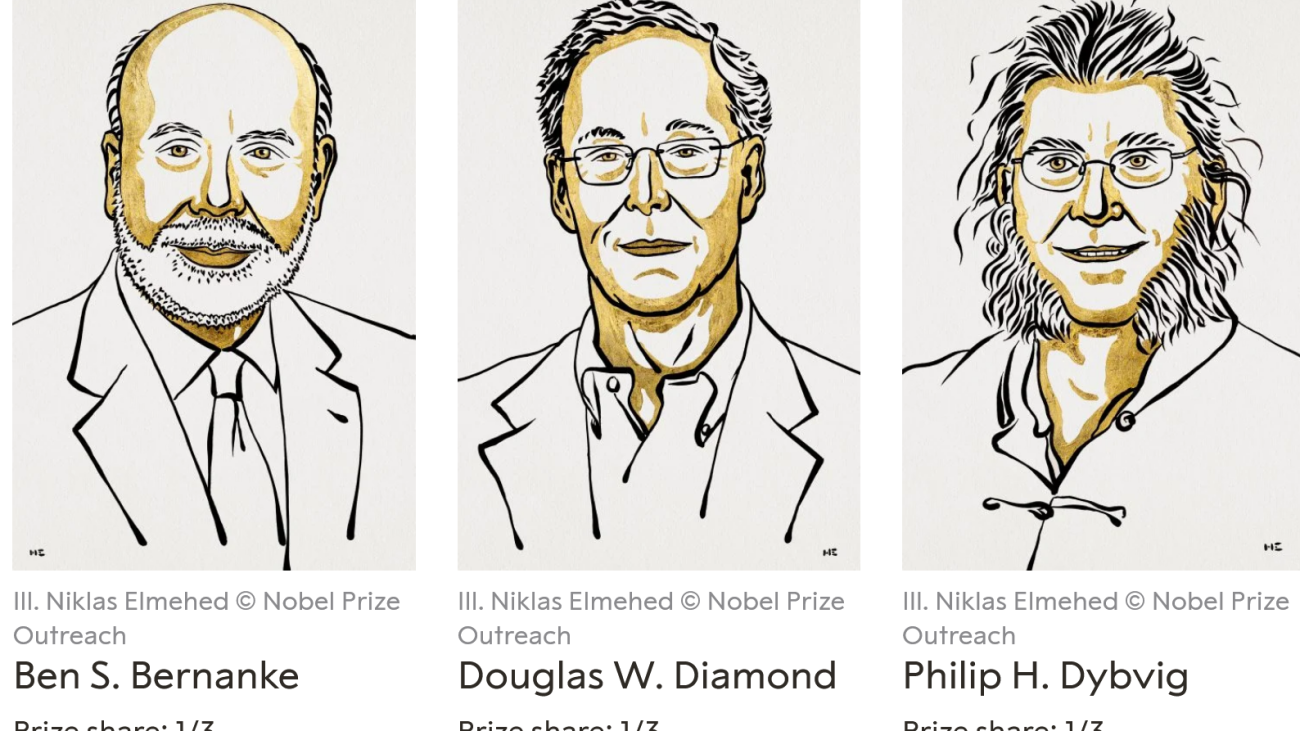
The Sveriges Riksbank Prize in Economic Sciences in Memory of Alfred Nobel 2022 was awarded jointly to Ben S. Bernanke, Douglas W. Diamond and Philip H. Dybvig “for research on banks and financial crises” explained briefly below:
What is the role of banks in the economy and society? What happens if they collapse?
The foundations of modern banking research were laid by Ben Bernanke, Douglas Diamond and Philip Dybvig in the early 1980s. Through statistical analysis and historical source research, Bernanke demonstrated how failing banks played a decisive role in the global depression of the 1930s. Bernanke’s research shows that bank crises can potentially have catastrophic consequences. This insight illustrates the importance of well-functioning bank regulation.

Ben Bernanke

Ben S. Bernanke - Nobel Prize in Economic Sciences
Ben S. Bernanke – Nobel Prize in Economic Sciences

Ill. Niklas Elmehed © Nobel Prize Outreach

Ben S. Bernanke
The Sveriges Riksbank Prize in Economic Sciences in Memory of Alfred Nobel 2022

Born: 13 December 1953, Augusta, GA, USA

Affiliation at the time of the award: The Brookings Institution, Washington, D.C., USA

Prize motivation: “for research on banks and financial crises”

Prize share: 1/3

Douglas Diamond

Douglas W. Diamond - Nobel Prize in Economic Sciences
Douglas W. Diamond – Nobel Prize in Economic Sciences

Ill. Niklas Elmehed © Nobel Prize Outreach

Douglas W. Diamond
The Sveriges Riksbank Prize in Economic Sciences in Memory of Alfred Nobel 2022

Born: 25 October 1953, Chicago, IL, USA

Affiliation at the time of the award: University of Chicago, Chicago, IL, USA

Prize motivation: “for research on banks and financial crises”

Prize share: 1/3

Philip Dybvig

Philip H. Dybvig - Nobel Prize in Economic Sciences
Philip H. Dybvig – Nobel Prize in Economic Sciences

Ill. Niklas Elmehed © Nobel Prize Outreach

Philip H. Dybvig
The Sveriges Riksbank Prize in Economic Sciences in Memory of Alfred Nobel 2022

Born: 22 May 1955, Gainesville, FL, USA

Affiliation at the time of the award: Washington University, St. Louis, MO, USA

Prize motivation: “for research on banks and financial crises”

Prize share: 1/3

Crypto rug pulls

Crypto rug pulls

1.

What is a rug pull in cryptocurrency?

A rug pull is a type of crypto scam that occurs when a team pumps their project’s token before disappearing with the funds, leaving their investors with a valueless asset. 

Rug pulls happen when fraudulent developers create a new crypto token, pump up the price and then pull as much value out of them as possible before abandoning them as their price drops to zero. Rug pulls are a type of exit scam and a decentralized finance (DeFi) exploit.

Before learning how to spot a rug pull in crypto and why crypto rug pulls happen, it helps to understand the three different types of rug pulls.

2.

What are the various types of rug pulls?

There are three main types of rug pulls in crypto: liquidity stealing, limiting sell orders and dumping. 

What are the various types of rug pulls?

Liquidity stealing occurs when token creators withdraw all the coins from the liquidity pool. Doing so removes all the value injected into the currency by investors, driving its price down to zero.

These “liquidity pulls” usually happen in DeFi environments. A DeFi rug pull is the most common exit scam.

Limiting sell orders is a subtle way for a malicious developer to defraud investors. In this situation, the developer codes the tokens so that they’re the only party that is able to sell them.

Developers then wait for retail investors to buy into their new crypto using paired currencies. Paired currencies are two currencies that have been paired for trading, with one against the other. Once there is enough positive price action, they dump their positions and leave a worthless token in their wake.

The Squid Token scam exemplifies rug pulls of this kind.

Dumping occurs when developers quickly sell off their own large supply of tokens. Doing so drives down the price of the coin and leaves remaining investors holding worthless tokens. “Dumping” usually occurs after heavy promotion on social media platforms. The resulting spike and sell-off are known as a Pump-and-Dump Scheme.

Dumping is more of an ethical gray area than other DeFi rug pull scams. In general, it’s not unethical for crypto developers to buy and sell their own currency. “Dumping,” when it comes to DeFi cryptocurrency rug pulls, is a question of how much and how quickly a coin is sold.

3.

Hard pulls vs soft pulls

Rug pulls come in two forms: hard and soft. Malicious code and liquidity stealing are hard pulls, whereas soft pulls refer to dumping an asset. 

Rug pulls can be “hard” or “soft.” Hard rug pulls occur when project developers code malicious backdoors into their token. Malicious backdoors are hidden exploits that have been coded into the project’s smart contract by the developers. The intent to commit fraud is clear from the get-go. Liquidity stealing is also considered a hard pull.

Soft rug pulls refer to token developers dumping their crypto assets quickly. Doing so leaves a severely devalued token in the hands of the remaining crypto investors. While dumping is unethical, it may not be a criminal act in the same way that hard pulls are.

4.

Are crypto rug pulls illegal?

Crypto rug pulls are not always illegal, but they are always unethical. 

Hard rug pulls are illegal. Soft rug pulls are unethical, but not always illegal. For example, if a crypto project promises to donate funds but chooses to keep the money instead, that’s unethical but not illegal. Either way, like most fraudulent activities in the crypto industry, both types can be challenging to track and prosecute.

The collapse of the Turkish cryptocurrency exchange Thodex is a prime example of a rug pull in crypto. The $2 billion dollar theft was one of the biggest crypto rug pulls of 2021. It is also one of the largest centralized finance (CeFi) exit scams in history.

Although Turkish police detained 62 people during its investigation of the major scam, the whereabouts of the alleged perpetrator remains unknown.

Other recent examples of protocols that have suffered this type of crypto rug pull include Meerkat Finance, AnubisDAO, Compounder Finance and Uranium Finance.

5.

How to avoid a rug pull in crypto?

There are several clear signs that investors can watch out for to protect themselves from rug pulls such as the liquidity not being locked and no external audit having been conducted. 

The following are six signs users should watch out for to protect their assets from crypto rug pulls.

Unknown or anonymous developers

Investors should consider the credibility of the people behind new crypto projects. Are the developers and promoters known in the crypto community? What is their track record? If the development team has been doxxed but isn’t well known, do they still appear legitimate and able to deliver on their promises?

Investors should be skeptical of new and easily faked social media accounts and profiles. The quality of the project’s white paper, website, and other media should offer clues about the project’s overall legitimacy.

Anonymous project developers could be a red flag. While it’s true that the world’s original and largest cryptocurrency was developed by Satoshi Nakamoto, who remains anonymous to this day, times are changing.

No liquidity locked

One of the easiest ways to distinguish a scam coin from a legitimate cryptocurrency is to check if the currency is liquidity locked. With no liquidity lock on the token supply in place, nothing stops the project creators from running off with the entirety of the liquidity.

Liquidity is secured through time-locked smart contracts, ideally lasting three to five years from the token’s initial offering. While developers can custom-script their own time locks, third-party lockers can provide greater peace of mind.

Investors should also check the percentage of the liquidity pool that has been locked. A lock is only helpful in proportion to the amount of the liquidity pool it secures. Known as total value locked (TVL), this figure should be between 80% and 100%.

Limits on sell orders

A bad actor can code a token to restrict the selling ability of certain investors and not others. These selling restrictions are hallmark signs of a scam project.

Since selling restrictions are buried in code, it can be difficult to identify whether there is fraudulent activity. One of the ways to test this is to purchase a tiny amount of the new coin and then immediately attempt to sell it. If there are problems offloading what was just purchased, the project is likely to be a scam.

Skyrocketing price movement with limited token holders

Sudden massive swings in price for a new coin should be viewed with caution. This unfortunately rings true if the token has no liquidity locked. Substantial price spikes in new DeFi coins are often signs of the “pump” before the “dump.”

Investors skeptical about a coin’s price movement can use a block explorer to check the number of coin holders. A small number of holders makes the token susceptible to price manipulation. Signs of a small group of token holders could also mean that a few whales can dump their positions and do severe and immediate damage to the coin’s value.

Suspiciously high yields

If something sounds too good to be true, it probably is. If the yields for a new coin seem suspiciously high but it doesn’t turn out to be a rug pull, it’s likely a Ponzi scheme.

When tokens offer an annual percentage yield (APY) in the triple digits, although not necessarily indicative of a scam, these high returns usually translate to equally high risk.

No external audit

It is now standard practice for new cryptocurrencies to undergo a formal code audit process conducted by a reputable third party. One notorious example is Tether (USDT), a centralized stablecoin whose team had failed to disclose that it held non-fiat-backed assets. An audit is especially applicable for decentralized currencies, where default auditing for DeFi projects is a must.

However, potential investors shouldn’t simply take a development team’s word that an audit has taken place. The audit should be verifiable by a third party and show that nothing malicious was found in the code.

Spotting a crypto rug pull scam: It takes some digging

In 2021, an estimated $7.7 billion was stolen from investors in rug pull cryptocurrency scams. These investors trusted that they were investing in legitimate projects, only to have the rug pulled from beneath their feet.

Before investing, it’s worth taking the time to research new cryptos and to do one’s due diligence before investing in a new project.

Solana Saga, the road to Web3

Solana Saga, the road to Web3

Solana Mobile, a subsidiary of Solana Labs, introduced Saga, a flagship Android mobile phone with unique functionality and features tightly integrated with the Solana blockchain making it easy and secure to transact in web3 and manage digital assets, such as tokens and NFTs.

“Almost 7 billion people use smartphones around the world and more than 100 million people hold digital assets – and both of those numbers will continue to grow,” said Anatoly Yakovenko, co-founder of Solana, the world’s most performant blockchain. “Saga sets a new standard for the web3 experience on mobile.”

Saga was introduced at an event in New York today, which also included the introduction of the Solana Mobile Stack, a framework for Android allowing developers to create rich mobile experiences for wallets and apps on Solana and create a “Secure Element” for private key management (read more here). The Solana Mobile Stack SDK is available to developers now and Saga is available for pre-orders starting today, with delivery in early 2023.

“We chose the Saga name because the story of crypto is still being written,” said Raj Gokal, co-founder of Solana. “This is the next chapter of this narrative and we believe opening up crypto to mobile will lead to greater adoption, better understanding, and more opportunities.”

Saga is designed and manufactured by OSOM, a leading Android development company whose team has extensive experience building computing hardware for Google, Apple, and Intel, among others.

“Saga starts from first principles to create a mobile experience for individuals, developers, and ecosystem participants that opens a new era of mobility,” said Jason Keats, co-founder and CEO of OSOM. “The world needs novel hardware to embrace the future that is web3, and building out an ecosystem that looks to the future without being burdened by past legacy ecosystems is hugely exciting for us.”

Saga includes a 6.67″ OLED display, 12 GB RAM, 512 GB storage, and the latest flagship Snapdragon® 8+ Gen 1 Mobile Platform, the security features of which will enable the Solana Mobile Stack’s Seed Vault. With the addition of a Secure Element built into the device, the Seed Vault keeps private keys, seed phrases and secrets separated from the application layer yet still capable of interacting with apps running on the device or in a mobile browser.

Pre-orders for Saga require a $100 fully refundable deposit, which will be applied to the anticipated final cost of $1,000, and will be prioritized for developers in order to test the Solana Mobile Stack and Saga. Those who pre-order may be eligible to receive a Saga Pass, an NFT accompanying the first wave of Saga devices and the first ticket to influencing the direction of the SMS platform.

For more information:

Solana Saga, the road to Web3

About Solana Mobile

Solana Mobile is a mobile technology company developing the Solana Mobile Stack and Saga.  It is a subsidiary of Solana Labs, a creator of open source software, and a contributor to Solana software and the Solana protocol. For more information, please visit https://solanamobile.com/.

Pre-order FAQs
How does the waitlist work?
To reserve your spot on the waitlist, enter your information, connect your wallet and make a $100 USDC refundable deposit. Once payment is complete, you’ll be added to the waitlist and be notified once it’s time to complete your order.
How much is the deposit for Saga?
Getting on the waitlist for Saga requires a $100 USDC deposit. The deposit amount will be deducted from the final purchase price of the Saga device. All deposits are refundable.
Do developers get early access?
Yes they do — certain developers will receive priority on the waitlist. Developers are needed to test Solana Mobile Stack and Saga. At checkout, make sure to fill in your developer details.
Where will Saga be available?
Saga will be available in the US, CA, EU, UK, CH, AU and NZ to start.
When will I get updates on Saga?
We’ll send email updates about Saga and its release date to the email you provide. Those who pay for a pre-order may be eligible to receive a Saga Pass, an NFT accompanying the first wave of Saga devices and the first ticket to influencing the direction of the Solana Mobile Stack platform.
Will the Solana phone have the Google Play store and all its apps?
Yes, Saga is fully Google Mobile Services enabled and will carry the Google Play Store and the core Google apps alongside the Solana dApp Store.

Snapdragon is a trademark or registered trademark of Qualcomm Incorporated.

Snapdragon is a product of Qualcomm Technologies, Inc. and/or its subsidiaries.

IoTex MachineFi

Will MachineFi dominate our real world?

In the future, machines will be the primary workforce. MachineFi is a new paradigm fueled by Web3 that underpins the new machine economy, whereby machine resources and intelligence can be financialized to deliver value and ownership to the people, not centralized corporations.

MachineFi realizes the vision that devices are owned by the people and serve the people. By joining the machine economy, people can now fully monetize their devices and associated digital assets on a global scale.

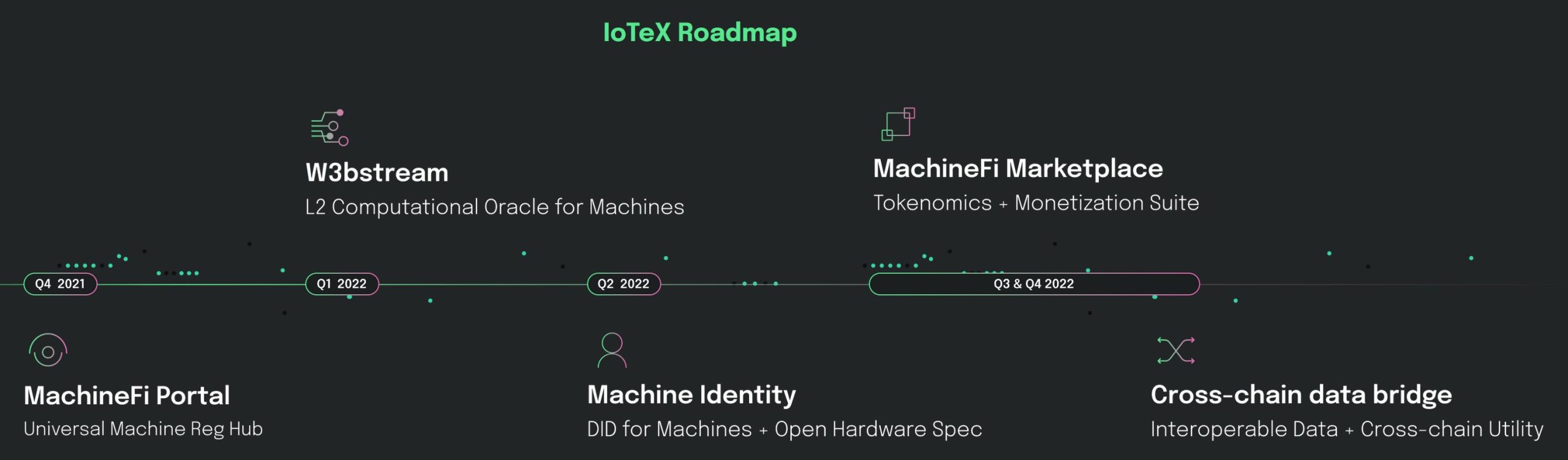
IoTeX Roadmap
IoTeX Roadmap

Introduction

Machines are emerging in our homes, businesses, and cities at a blistering
rate. In 2020, more than 150 new machines were activated every second,
connecting the physical and digital worlds like never before. By 2030,
McKinsey predicts machines will outnumber humans by 10:1 and generate
more than $12 trillion in economic value. From smart thermostats and
fitness trackers to connected vehicles, solar panels, and satellites,
machines are being inserted into practically every facet of the global
economy and our personal lives. But as we marvel at the new machine
economy that is blossoming before our very eyes, we must pause and ask
ourselves: who will own these billions of machines and this future machine
economy?

We are at a pivotal moment in human history. Trust in our institutions is at
an all-time low, while the desire for control and ownership from users is
growing by the day. Over the past decade, centralized corporations have
been the gatekeepers and sole beneficiaries of the largest technology
revolution in human history. Tech giants control our devices, monitor our
activities, mine our data, and earn huge profits with no value returned to
users. Now is the time for change. By re-architecting our world using
blockchain and Web3 technology, we can guarantee that the trillion-dollar
machine economy provides value, control, and opportunity to everyday
people, not omnipotent corporations.

This is the essence of MachineFi. With IoTeX 2.0, we are embarking on a new
journey to equip machines with all of the tools they need to be selfsovereign and allow users to monetize the unique services and intelligence
from their machines. Since day one, we have always believed that
machines, not humans, will one day be the largest users of blockchain. With
MachineFi, we will turn this belief into action.

In this Vision Paper, we are proud to share our long-term vision for
MachineFi, as well as an overview of the IoTeX 2.0 protocols and products
that will make our MachineFi vision a reality. By realizing this vision IoTeX will
lead the masses in transitioning from centralized control to decentralized
freedom, empowering users to own and control their machines, as well as
the data and value their machines generate. Join us on our mission to
enable millions of users to capture the value from the future machine
economy and expand the possibilities of the Metaverse, Web3 world, and
beyond.

MachineFi will connect the Real World and Metaverse

Figure 1. IoTeX 2.0 Overview

The MachineFi Vision

Machines Will Be Our Future Workforce

The convergence of artificial intelligence, blockchain, 5G connectivity,
virtual reality, and other frontier technologies has sparked a technological
revolution that is fundamentally transforming the way society operates.
Although these technologies have evolved independently over time, they
are becoming increasingly intertwined and packaged into a new productive
asset: intelligent and autonomous machines.

What seemed like science fiction only a few years ago is now becoming a
reality in the budding machine economy. Autonomous taxis are now
delivering the first driverless rides. Doctors are now performing surgeries
from thousands of miles away using remote surgical systems. Warehouses
are now utilizing robots that match or even exceed the mobility, dexterity,
and agility of people. Security cameras are now providing surveillance-asa-service with alarmingly accurate facial recognition. And governments
around the world are now investing heavily in the next generation of robot
armies and drones. Across every industry, machines are not only
collaborating with human workers, but are also replacing cohorts of human
workers altogether.

PricewaterhouseCoopers (PwC) predicts that 50% of all jobs will be partially
automated by 2030, and Deloitte estimates that 30% of the world’s workers
will be replaced entirely by machines within the next 20 years. Whether we
are ready or not, machines will inevitably comprise the majority of our
world’s future workforce.

Which begs the question:
Who will own these
billions of machines and the future
machine economy?

Community-Owned
Machine Networks

The infrastructure that powers our modern world, often called
Web 2.0, relies on centralized servers and vertically integrated
tech stacks that are controlled exclusively by corporations. The
centralized nature of Web 2.0, amplified by corporations’
capitalistic focus on profits over trust, has unleashed
consequences for users such as data breaches, censorship,
and targeted advertising that are now impossible to rein back in.
If we apply this Web 2.0 philosophy to the new machine
economy, our future workforce of billions of machines will be
monopolized by the same corporations that have exploited our
trust time and time again.

It is time to change the status quo. Thanks to blockchain
technology, a paradigm shift known as Web 3.0 has come to life
which aims to replace corporate-owned, centralized networks
with community-owned, decentralized networks. Key benefits
that are not inherent in a Web 2.0 structure, such as
composability, free market incentives, and user-ownership, are
built-in to Web 3.0 by design

I. Composability

The ability for anyone in a network of distributed participants to leverage
the work of others to create new solutions in a collaborative, communitydriven fashion. Developers can bootstrap their own projects and
communities without starting from scratch by leveraging the collective
mindshare of all network participants to fuel innovation

II. Free Market Incentives
The prices for goods and services in a Web 3.0 network are defined in a
peer-to-peer (P2P) fashion by users that interact with each other without
centralized intermediaries. P2P networks are self-regulated and open to
everyone, where participation is driven not by top-down mandates but by
transparent incentives

III. Community Ownership
Unlike centralized networks that generally gravitate towards zero-sum
relationships where value is extracted from network participants,
decentralized networks reward users that contribute and utilize the
network by delivering ownership/equity of the network in a meritocratic
fashion

The above benefits are paramount to ensure the future of MachineFi is open, fair, and
most importantly community-owned. Only with the creativity and productivity of
pioneering developers and users can MachineFi reach its full potential. Specifically for
bootstrapping machine networks, which are capital-intensive with high upfront costs, the
composability and community-driven nature of Web 3.0 removes significant barriers to
entry by applying free-market incentives to raise capital, build communities, and scale
the network to new heights.

Proof of Anything

“Proof of Work” and “Proof of Stake” are common terms in crypto, but are
often mislabeled as consensus mechanisms. In fact, these are actual
proofs that an entity must provide to the blockchain in order to receive
rewards, permissions, or other benefits. For Bitcoin, if a miner proves that
they have done the work and calculated the correct hash, then they are
granted the right to mint the next block and earn a reward. For Ethereum, if
a validator proves to the blockchain they have staked sufficient ETH tokens,
then they are granted permission to be a network validator. But what if the
“proofs” we provide to a blockchain could also include things that everyday
people and businesses did in the real world?

Proof of Anything:
IoTeX machines deliver proofs of real world activity to the blockchain
real-time GPS location from an asset tracker like Pebble
Proof of Presence:
health-related metrics from a fitness tracker or wearable
Proof of Health:
driving patterns or specific routes taken from a vehicle
Proof of Safety:
building’s energy efficiency score from a smart meter.

Just as Chainlink jump-started the DeFi renaissance by establishing a
“single version of truth” of crypto-asset prices, IoTeX will establish a “single
version of the truth” for things that happened in the real world. Smart home
devices, wearables, vehicles, and all types of devices can adopt our
MachineFi concept to become “proof generators” where the proofs will be
fed as inputs to smart contracts in order to trigger on-chain actions.

For example, insurance companies can reward homeowners every time
they prove they have locked their homes, which is a win-win scenario for all
parties. Possibilities are also abound in gaming, where proof of real-world
activity can transfer to your in-game characters — by proving you are
improving your health in the real world using healthcare wearables, your ingame character can also receive more health points. Finally, by proving your
vehicle’s GPS location, you may be able to receive on-chain offers from
nearby restaurants or receive token rewards for contributing intelligence to
a map application like Waze.

Mirroring the Real World to the Metaverse

By connecting the real world to the digital world, MachineFi will open a brand
new design space for blockchain builders where, for the first time, users can
earn digital assets or digital reputation based on their real world actions that
are captured/verified by machines. The impact of MachineFi grows even
further when considering the Metaverse, which will be an immersive virtual
world that can mirror events in the real world thanks to IoTeX:

I. Physical World
The world we experience with our bodies and five senses. In particular, the
physical world contains communication, computing, and storage resources
(i.e., tangible assets) that are required for supporting operations of the
Metaverse

II. Digital Transformation
By capturing the status of physical objects, we can create digital twins of
every object in every place to build seamless connections and two-way
interactions between the physical and virtual worlds. MachineFi will serve as
a composable and user-centric computing fabric that enables real world
users/machines and virtual users/machines to exchange value in a
trustworthy manner.

III. Metaverse
An immersive, computer-simulated environment with specific spatial and
physical characteristics. The Metaverse provides a vibrant, parallel world
that enables users to participate in virtual activities, gain virtual status, and
interact with other virtual beings via virtual avatars

Figure 2. The Metaverse with Two-Way Interactions

Machines, encoded with human intelligence,
will soon be the dominant workforce in the
real world, constantly listening, watching, and
monitoring our activities.

These facts can be used to program the metaverse, enriching virtual
applications with real world information. For example, if you prove you have lost
10 pounds in the real world by connecting your smart scale to IoTeX, then your
metaverse avatar may look slimmer as well. If you prove that you have traveled
to many countries in the real world, then your metaverse avatar may also gain
this real world perspective and unlock new “countries” in the metaverse. And
finally, if you prove that you are a good driver via your vehicle’s telemetry data,
your metaverse avatar may receive permissions in the metaverse to use new
types of virtual vehicles. An infinite number of possibilities awaits!

Enabling the Metaverse to Program the Real World

Play-to-Earn is one of the most innovative concepts in crypto today. Within this
new GameFi industry, users can perform actions in the digital world to earn
digital assets and digital reputation. By mirroring events in the real world to the
metaverse, IoTeX expands on the Play-to-Earn concept by enabling users to
perform actions in the real world to earn digital assets or digital reputation.
This is an innovative concept, but even more groundbreaking is the opportunity
to use the metaverse to program the real world. In other words, enabling users
to perform actions in the virtual world (metaverse) to earn rewards and
benefits in the real world.

The metaverse is still in its infancy, and there is much to discover about how
the metaverse will be built, adopted, and scaled. Regardless of how the
metaverse evolves from here, one thing is clear: building a two-way bridge
between the real world and the metaverse will enable all types of intelligence
to be synchronized and massive network effects to be captured. By instituting
incentives in the metaverse to complete missions, contribute mindshare, or
provide resources, metaverse builders will be able to leverage the borderless
user base and open incentives that crypto has popularized to bootstrap new
virtual ecosystems.

Why most traders lose money?

Why most traders lose money?

Hey everyone!

Trading & investing is not easy. If it were, everyone would be rich.
Here’s a couple time-honored reasons that traders lose money, and some tips to help you get back to basics.

Lack of knowledge

Many traders jump into the market without a thorough understanding of how it works and what it takes to be successful. As a result, they make costly mistakes and quickly lose money.

Poor risk management

Risk is an inherent part of trading, and it’s important to manage it effectively in order to protect your capital and maximize your chances of success. However, many traders don’t have a clear risk management strategy in place, and as a result, they are more vulnerable to outsized losses.

Emotional decision-making

It’s easy to feel strong emotions while trading. However, making decisions based on emotions rather than rational analysis can be a recipe for disaster. Many traders make poor decisions when they are feeling overwhelmed, greedy, or fearful and this can lead to significant losses.

Lack of discipline

Successful trading requires discipline, but many traders struggle to stick to their plan. This can be especially challenging when the market is volatile or when a trader is going through a drawdown. Create a system for yourself that’s easy to stay compliant with!

Over-trading

Many traders make the mistake of over-trading, which means they take on too many trades and don’t allow their trades to play out properly. This leads to increased risk, higher brokerage costs, and a greater likelihood of making losses. Clearly articulating setups you like can help separate good opportunities from the chaff.

Lack of a trading plan

A trading plan provides a clear set of rules and guidelines to follow when taking trades. Without a plan, traders may make impulsive decisions, which can be dangerous and often lead to losses.

Not keeping up with important data and information

The market and its common narratives are constantly evolving, and it’s important for traders to stay up-to-date with the latest developments in order to make informed decisions.

Not cutting losses quickly

No trader can avoid making losses completely, but the key is to minimize their impact on your account. One of the best ways to do this is to cut your losses quickly when a trade goes against you. However, many traders hold onto losing trades for too long, hoping that they will recover, and this can lead to larger than expected losses.

Not maximizing winners

Just as it’s important to cut your losses quickly, it’s also important to maximize your winners. Many traders fail to do this, either because they don’t have a plan in place, telling them when and how to exit a trade. As a result, they may leave money on the table and miss out on potential profits.

Not Adapting

Adapting to changing market conditions is paramount to success in the financial markets. Regimes change, trading edge disappears and reappears, and the systems underpinning everything are constantly in flux. One day a trading strategy is producing consistent profits, the next, it isn’t. Traders need to adapt in order to make money over the long term, or they risk getting phased out of the market.

Overall, the majority of traders make losses because they fail to prepare for the challenges of the market. By educating themselves, developing a solid trading plan, and planning out decisions beforehand, traders can improve their chances of success and avoid common pitfalls.

Bull markets are a time of optimism and growth, and they can be a great opportunity for making substantial gains. However, it’s important to remember that bull markets don’t last forever, and it’s crucial to approach them with a healthy dose of caution while keeping your eye on your long-term goals.

Here are a few more things to keep in mind when dealing with bull markets:

Don’t get caught up in the speculative frenzy
It’s important to remain level-headed and avoid making impulsive decisions based on short-term gains. Take time to thoroughly research any trades you’re considering. It’s always good to focus on ideas with strong fundamentals as well as technicals.

Keep an eye on valuations
In a bull market, it’s common for stock prices to rise, sometimes to levels that may not be justified by a company’s fundamentals. For investors, it can be important to keep an eye on valuations and make sure the stocks you’re investing in are reasonably priced.

Be prepared for reversals
Like all good things, the Bull markets too eventually come to an end. Hence, it’s essential to be prepared for a downturn. It’s always good to manage risk exposure by employing techniques such as diversification and hedging.

Control your risk
It’s natural to want to hold on to the positions that are performing well, but it’s important to remember that bull markets eventually come to an end.
If you’ve made substantial gains, trailing may be a good option to lock in profits should things change quickly. Letting the winners ride by continually trailing your positions is one good strategy for improving a trade’s Risk-Reward ratio.

Keep a long-term perspective
Trading is a marathon , not a sprint . Bull markets can be a great opportunity for gains, but it’s important to keep a long-term perspective about your goals. Did you miss the big moves? Don’t get angry and make bad decisions. There will be more opportunities down the road to apply what you’ve learned.

Bull markets can provide excellent opportunities, however, they must be approached with caution and with defined personal goals. Consider the risks and rewards of each investment, keep an eye on valuations, and always be prepared for a downturn.

We hope you enjoyed! Please feel free to write any additional tips or pieces of advice in the comments section below!

exchange-based-tokens-1132x670

Lessons from Binance on FTT collapse

Exchange tokens are native assets distributed by a centralized exchange, often providing the holders’ benefits within its closed ecosystem. Initially, they were created by crypto exchanges to bootstrap funding from users and create a “community ownership” model more palatable to investors.

Exchange tokens and their use case have come under greater scrutiny due to the recent collapse of FTX. The exchange’s downfall was primarily brought about through the misuse of its native token, FTT. We explore what happened with FTT before analyzing and attempting to analyze the value of major exchange tokens.

The Curious Case of FTT

An exchange token derives its value from the health of the business of the underlying exchange. How closely the token is tied to the actual cash flows of the exchange is a broad spectrum we will example in further detail in coming sections. FTX’s exchange token FTT sat towards the end of that spectrum with a tenuous tie to intrinsic value besides faith in the FTX entity. FTT only held value if FTX existed, and therefore the token can be thought of as a bet on the solvency and health of the exchange.

FTT maintained a tie to FTX through a buyback and burn mechanism. A portion of FTX’s revenue was used to buy back and burn FTT’s supply, similar to a stock buyback. However, FTX / Alameda also used this token as collateral for loans. Instead of it being a one-way relationship where value flowed from exchange business to token, it became a circular relationship; value flowed back from the token to the exchange as the price of the token had a direct impact on the liquidity, solvency, and future of the business. As the token price came under pressure, the solvency of the business was affected, putting further pressure on the token price, and creating a death spiral.

While FTT used what seems to be a reasonable model of tying exchange value to token value by reducing token supply with profits, the exchange’s undoing was the inherent leverage it/Alameda created through using FTT as collateral. Other exchange tokens have taken different approaches to how to drive value back to the holders.

Exchange Token Value Capture

Equities can be considered a residual claim on the cash flows of the underlying company. Most native cryptocurrencies can be viewed as a claim on the revenue (transaction fees, MEV, etc.) from the blockspace of an underlying network. Within a vertical like DeFi, we can similarly think of token value as the amount of cash flow generated on the underlying network. Exchange tokens may or may not have direct ties to an exchange’s revenue but have other ways to create value for holders.

1 F13Yty6qMV9SK-qDLgDy8g

Finally! Historical Market Capitalization and more

We’re happy to release a valuable update to IntoTheBlock Analytics. We’ve improved several indicators and metrics including historical correlation, historical market cap, circulating supply and many more!

There are 6 main improvements to our blockchain analytics platform that will help you get additional insights and guide your trading decisions. Let’s go through each of them.

Historical Market Cap

We now provide the daily market capitalization from the beginning of each asset. Market capitalization is the total dollar value of all the coins that are in circulation. This is an important metric because it helps you assess the value of a crypto asset with the circulating supply in mind.

Historical Market Cap

Circulating Supply

We now provide the daily circulating supply from the beginning of each asset as well. This refers to the number of cryptocurrency coins or tokens that are publicly available and circulating in the market.

Circulating Supply
Circulating Supply

Correlation Matrix & historical correlation

We now provide a correlation analysis between any crypto asset and the top 10 assets ordered by Market Cap, instead of only the correlation to BTC. The time frames we support are 30 days and 60 days.

Correlation Matrix & historical correlation

With these new metrics, you will also be able to analyze the historical correlations per asset.

Time held of coins transacted

With this new release we provide insights into how long coins are held before they are transacted. This chart includes price and volume of transacted coins. This can be useful to analyze because it helps to understand the behavior of holders of a specific asset and potential selling pressure.

Time held of coins transacted

Holdings Distribution Matrix

Last but not least, we now provide a simple breakdown of the number of addresses and volume held by different levels of holdings in our crypto Holdings Distribution Matrix. This table makes it easier to view how assets are distributed in the market.

Holdings Distribution Matrix

Whilst this release brings a lot of exciting new metrics to our Analytics platform, we have plenty of things coming in the near future, including new assets and more features. Sign up for a free trial and click here to try out all the improved cryptocurrency analytics