What is a Bitcoin Improvement Proposal? (BIP)

Since Satoshi Nakamoto mined the Bitcoin genesis block in 2009, the Bitcoin blockchain has gone through numerous updates and changes aimed at mending its shortcomings and improving the protocol’s overall functionality. These updates and changes are outlined as proposals and are commonly referred to as BIPs, which is short for Bitcoin improvement proposals.

In essence, BIPs are design documents that lay out the features or information to be added to or changed in the protocol. They are designed by developers and then subsequently voted on by miners. A BIP is passed and incorporated into the protocol if it is upvoted by at least 95% of Bitcoin’s mining community.

BIP ESSENTIALS

  • A Bitcoin improvement proposal (BIP) is a document specifying the features and information to be integrated into the Bitcoin protocol.
  • There are three types of BIPs:
  1. Standards track BIPs – alter the protocol or transaction and block validation;
  2. Informational BIPs – draw attention to design issues and general guidelines;
  3. Process BIPs – propose changes to the process.
  • BIPs must go through the following stages to be activated:
  1. Review by an editor;
  2. Approval by the miners;
  3. The community must upgrade to the new protocol version to benefit from the BIP’s novel functionality.

Three types of BIPs

There are three major types of Bitcoin improvement proposals that differ from one another in terms of the improvements they describe or propose. The three different types are as follows:

  1. Standards track BIPs are BIPs used for making changes to the network protocol or to the methods of transaction or block validation. Standards track BIPs are also aimed at optimizing the interoperability between the two versions of the Bitcoin protocol that coexist in the event of a fork. This type of BIPs always require community consensus.
  2. Informational BIPs are BIPs that draw attention to design issues, general guidelines and supporting information. Informational BIPs, as the name itself suggests, are only there for information’s sake. It does not matter whether the community takes them seriously or ignores them altogether.
  3. Process BIPs are BIPs that describe or propose a change in the process. They are similar to Standards track BIPs and require community consensus. They cannot be ignored, but unlike Standards Track BIPs, they are applied outside the Bitcoin protocol.

Soft-fork and hard-fork BIPs

Like any blockchain software modification, BIPs require the Bitcoin blockchain to be forked in order to be implemented. They can be implemented with either a soft fork or a hard fork, depending on whether the proposed change retains compatibility between the branches. A BIP that is introduced by means of a soft fork retains the cross-compatibility of different blockchain versions, whereas a BIP that requires a hard fork does not.

However, BIP forks should not be confused with user-activated forks. While both types of forks implement protocol upgrades, their adoption process differs greatly. Hard-fork BIPs, for instance, require the entire Bitcoin economy to adopt the proposal, whereas user-activated hard forks (UAHFs) do not. It can be noted that, to date, no hard-fork BIPs have yet been implemented, which is why this article focuses predominantly on soft-fork BIPs.

And while the decision on whether to adopt a hard-fork BIP lies in the hands of the Bitcoin economy – i.e. all BTC wallet owners and merchants who support BTC payments – soft-fork BIPs work differently. The adoption of soft-fork BIPs is up to miners. They can express their support for a certain BIP by including relevant data in the blocks they have mined. A soft-fork BIP is considered to have been approved if at least 95% of miners on the Bitcoin blockchain adopt the proposal.

Once approved by miners, a soft fork is implemented which introduces a stricter set of rules. To be able to use the novel functionality proposed in the BIP, the community (this includes miners, full nodes, exchanges, payment service providers, etc.) will have to upgrade their software to the new version.

Each BIP is assigned a label which specifies the status of that BIP. A BIP receives its first status, i.e. “Draft,” once it has been checked by the first editor. Then, the author may assign the label “Deferred” or “Withdrawn.” Alternatively, a BIP labelled “Draft” may also receive the label “Rejected” or “Approved” from the network community.

For a soft-fork BIP to be labeled “Final,” the following three criteria must be met (according to BIP-009):

  1. The BIP follows the correct format as specified in BIP-1;
  2. The BIP includes code implementations of the proposed changes to the protocol;
  3. The BIP has 95% support from the last 2016 miners (these span over the past period of approximately 14 days’ worth of mining 10-minute blocks).

Over 130 BIPs have been proposed as of the writing of this article. The entire history can be accessed at this link.

Notable examples of BIPs

The first BIP to have been implemented was BIP-1. It was submitted by Amir Taaki in 2011. It provided a detailed presentation of what BIPs should look like, defining the format and structure of all the BIPs to come.

Perhaps one of the most notable Bitcoin improvement proposals was Segregated Witness, or SegWit. First presented at the Scaling Bitcoin conference in December 2015, SegWit was outlined in BIP-91, BIP-141 and BIP-148. Its aim was to fix transaction malleability and make it impossible to modify transaction IDs. With the soft-fork threshold at 95%, SegWit was successfully adopted by the Bitcoin mining community around mid-September 2017. Having fixed transaction malleability, Segregated Witness made it possible to develop the Lightning Network, a layer 2 solution designed specifically for Bitcoin (and altcoin blockchains).

Another notable example is Merkelized Abstract Syntax Tree, or M.A.S.T., which was outlined in BIP-116 and BIP-117. M.A.S.T. is a cryptographic tool that enables complicated data sets to be added to the data associated with Bitcoin transactions. While M.A.S.T. makes it possible to further specify data, it simultaneously reduces the amount of data that needs to be recorded on the blockchain.

With ongoing developments in terms of BIPs, the Bitcoin community tries to make the Bitcoin protocol run as smoothly as possible. In addition to the fact that bitcoin is the largest cryptocurrency by market cap, it is also this continuous development that makes the rapidly-evolving and expanding blockchain network so attractive to crypto traders.
3840x800_Hero-image_4-1920x480

Introducing a game-changer: The 1st Web3 firewall, built into ZenGo

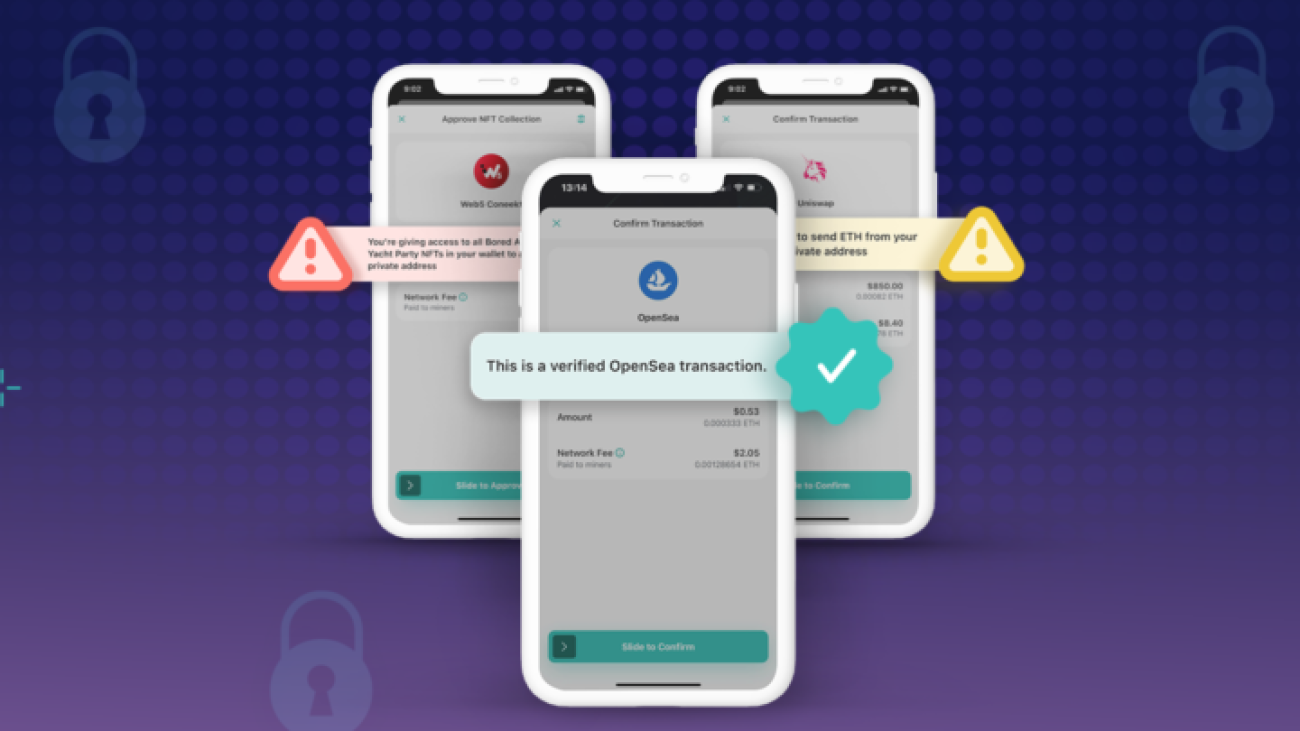
ZenGo is introducing a Web3 firewall: A new paradigm for safe and secure web3 transactions. In 2022 alone nearly $2 billion of NFTs and cryptoassets were stolen in malicious hacks affecting even hardware wallets. ZenGo’s Web3 firewall, ClearSign, informs, alerts, and protects ZenGo users against approving the most sensitive and vulnerable Web3 attacks. Combined with ZenGo’s MPC security architecture that removes private key vulnerabilities, ZenGo continues to innovate as the most secure crypto wallet in Web3.

A new paradigm in Web3 Security: ClearSign Firewall

Web3 feels like a highway without stoplights. Transacting in Defi and NFTs feels like being blind in a risky road with likely accidents and wallets make no effort to properly inform you and protect you about those risks. That can no longer be the case.

ZenGo’s ClearSign technology classifies sensitive on-chain transactions a user makes into 3 risk levels, based on transaction sensitivity, levels of permission granted to external systems, and known scams. Just like a stoplight, with 3 levels of safety.

  • Green: This interaction is with a verified Dapp and/or known smart contract.
  • Yellow: This interaction is context-dependent but generally reflects uncommon behavior: Stay alert and confirm that intent is aligned with expected results.
  • Red: ClearSign has detected highly unusual behavior and immediate attention is required. Most of the most sensitive red transactions require a double-confirmation.

Green Alerts: Verified Dapps

ZenGo is integrating leading Web3 Dapps and known smart contracts to confirm when you are connecting to original contracts, and not fake or phishing websites that try and confuse you into giving away your assets. Look for the green checkmark during the signing process.

Verified smart contracts: ZenGo has incorporated verified smart contracts on dapps like OpenSea and UniSwap to provide the clarity and assurance that you are interacting with the legitimate dapps’ smart contracts.*

Signatures: Sometimes a Web3 dapp will request you to “sign” something. These types of actions are context-dependent: Sometimes they are harmless, and other times they have been used to steal assets from users.

This can be a stressful moment for many. WHAT are they asking, and how can you be sure that the request you are approving is a benign signing request – and not a more nefarious attempt to gain access to assets in your wallet?

  • Do you intend to simply sign and authenticate a general message? ZenGo has verified Dapp signing requests from Dune, CollabLand, and others as benign – and will be adding additional dapps in the future.
  • To add your Dapp to the waitlist, contact us: partner@zengo.com.

Yellow Alerts: Suspicious approvals & Uncommon behaviors

Some transactions are potentially suspicious, others are absolutely fine: Many times it depends on the context of the transaction and your intention. Millions of dollars have been stolen in transactions because it was unclear to the user what they were approving. ClearSign brings a new level of transparency and clarity to these types of transactions:

  • Do you intend to send or transfer your crypto or NFTs to a private address, when you thought you were actually engaging with a Web3 dapp smart contract?

If the answer is yes – great: Go ahead. But if the answer is NO: Then this ClearSign alert might just save you from losing millions of dollars 💪

Phishing alert! At first glance, the above Dapp might appear to be Uniswap. But look again: ClearSign alerts you: It’s Uniswapp – and it’s trying to do something unusual.

Red Alerts: Warnings against giving access to your wallet

One of the most harmful security hacks is when a user grants a malicious actor access to their assets (tokens or NFTs). This happened in countless phishing scams, including the phishing scam that resulted in Seth Green losing his Bored Ape.

  • Do you intend to grant access to your crypto wallet? ClearSign is constantly monitoring security at the smart contract level – if a Dapp is hacked and suggests you grant wallet access to a private address (instead of a smart contract), ClearSign will alert you before you make a mistake.
Phishing alert! ClearSign alerts that this 1) Isn’t a smart contract but rather a private address, and 2) It’s trying to access your entire account – highly suspicious!

MPC = Ultimate Wallet Security: Why ZenGo is the most secure crypto wallet in Web3

Over $100 billion dollars of bitcoin has been lost or stolen in the last decade because of poor private key and seed phrase management. Are your assets safe? Recoverable if your phone is lost or stolen?

Ultimately, all traditional crypto wallets have the SAME vulnerability: Private keys, which represent a single point of failure. From browser-based wallets like Metamask to hardware wallets like Ledger, every traditional crypto wallet relies on the same vulnerable security architecture.

ZenGo is different. ZenGo’s baseline security architecture leverages MPC instead of private keys, meaning your crypto and NFTs can’t get lost or stolen when seed phrases are exposed: Because your wallet does not have a seed phrase to get exposed! Learn more about ZenGo and MPC here, and realize why your ZenGo wallet offers the ultimate in Web3 simplicity and security.

A note to App developers:

No integration required on your end; ClearSign is deployed by ZenGo and can be fully-integrated with virtually no development support by the Dapp.

ZenGo is continuing to integrate verified dapps. To add your Dapp to the waitlist, contact us: partner@zengo.com.

*ClearSign Safety Disclosure: ClearSign is not a replacement for common security practices, including hacks and scams practiced via social engineering. Always be careful about transactions made to untrusted parties on social networks or entities that might be impersonating people, companies, or trusted brands you know. Phishing is and will continue to be a vulnerability that no technology can 100% prevent. This does not serve as financial advice nor assurance of any project’s longterm legitimacy or viability. As always, do your own research.

Bitcoin-Magazine

21 Days of Bitcoin DAY 21: Hyperbitcoinization – Life Under the Bitcoin Standard

There’s one important question left to be answered.
When we talk about how fiat currencies are “unstable,” this simply means that there is room for instability within the structural design of fiat currencies — that governments can be corrupted and make poor fiscal decisions such as printing exorbitant amounts of money. But there remains a concern for instability in bitcoin, in that the price of bitcoin fluctuates too much for it to be used as a day-to-day currency.
There is a difference between the instabilities here — Bitcoin is secure, fiat is insecure; bitcoin is volatile, fiat is relatively stable in price(at least in powerful nation-states). In order to actually use bitcoin the way we currently use fiat one day, it needs to be stable. So, the question remains: How can we ever enforce a bitcoin standard if the price in terms of fiat dollars fluctuates so much?

Will Bitcoin Replace Fiat?

There are a few hypothetical scenarios that could play out. Some people think fiat will never disappear, while others think that bitcoin will completely overturn the existing financial system. Whatever happens, one thing remains true: Bitcoin is here to stay and will continue to play an increasingly prevalent role in our global financial system.
Realistically, bitcoin will not do a complete overhaul of fiat. However, anything is possible, and it’s a scenario that hasn’t played out before which is why it’s so hard to imagine. If bitcoin were to replace fiat, it would likely require the good-will of worldwide governments to concede to a decentralized currency. Knowing anything about any of our governments, it’s a highly unlikely scenario.
Instead, the path to global adoption will look more like individuals choosing self-sovereign stores of wealth. Keep in mind that because Bitcoin is permissionless, taking the right privacy measures means you can use and hold bitcoin even where outlawed.
Most likely, we will continue treating bitcoin as a store of wealth — an asset like real estate or stocks — that we can utilize in conjunction with the legacy lending system. By storing a portion of bitcoin as collateral, people can borrow fiat money to pay for day-to-day living expenses. There are a few lenders in some countries who have released this capability already.

CBDCs: Central Bank Digital Currencies

Many politicians have called for the implementation of CBDCs — a centralized digital currency — that would allow governments to retain their central authorities over monetary policies. This, if implemented, may come with less privacy than the cash system we still use today.
They foolishly think that this will kill the cryptocurrency industry as a whole. However, because so many people are afraid of CBDCs like the digital yuan potentially exercising privacy and personal security violations, this may well push bitcoin adoption forward as people seek the only truly self-sovereign money solution out there.

The Bitcoin Standard

When we think about the volatility of bitcoin, we think about it in terms of dollars, or whichever other fiat currency is native to us. But if we were to truly adopt a bitcoin standard — without fiat in the picture — then…what exactly are we comparing bitcoin’s price to? Is one bitcoin today not still one bitcoin tomorrow? Are 50 sats not still 50 sats?
As technology advances, our consumer goods naturally become cheaper — deflationary, if you will. As central governments strive to manipulate markets and prevent deflation at all costs, I implore you to think about the true alternative that bitcoin allows. If our current system is so broken, why are we still trying to break it? For more reading on this topic, I encourage you to read “The Price of Tomorrow”, **by Jeff Booth.

Over the last three weeks, we’ve taken down our fiat walls and opened the door to true sound money. This is just the beginning of your Bitcoin journey, and you have so much left to learn.
Bitcoin is our newfound grace — and all we know since our fiat days is, everything has changed.

Wait, don’t go! It doesn’t have to be over quite yet…. Continue the conversation on Twitter with #21DaysofBitcoin

Bitcoin-Magazine

21 Days of Bitcoin DAY 20: DeFi on Bitcoin

If you’ve dabbled in the cryptocurrency world, you might know of bitcoin as a “store of value,” and ether (the Ethereum Network token) as the “smart contract thing.”
Yes, you can build cool stuff on Ethereum. You can write “smart” and programmable contracts. You can mint NFTs. You can create entirely new decentralized finance (DeFi) ecosystems on Ethereum and come out with your own tokens if you wanted to.
But ultimately, none of that cool technology that’s sitting on top of the Ethereum blockchain or any other blockchain project matters in the long-run. Why? Because the next generation of the internet should and will be built on Bitcoin instead.

Creating a Decentralized Web

Bitcoin doesn’t need to operate the way that Ethereum does. It works all on its own as a decentralized digital currency, and many people think that’s enough; bitcoin has a simple investment thesis and there’s no need to innovate beyond that when it comes to treating bitcoin as a store of value and high growth asset.
However, problems remain regarding the centralization of the infrastructure built around bitcoin — this includes exchanges and lending platforms that are centrally hosted and remain under the threat of jurisdiction. This creates barriers to entry (unequal distribution based on borders) that could be fixed with a new, decentralized internet infrastructure.
As we went over last week, Bitcoin is the ultimate blockchain protocol to build the next generation internet on, due to its incumbent status as the most secure and decentralized network of any cryptocurrency. Therefore, it only makes sense to innovate DeFi on Bitcoin.

How Will This Happen?

There is an entirely separate technical deep dive required for one to begin understanding the DeFi universe, but the simple reason for why Bitcoin-native DeFi is so far behind is due to its initial design. Other cryptocurrency networks like Ethereum and Solana were built with the intent to create DeFi and Web3.0, but Bitcoin remains simply as a sound monetary network.
While it is difficult to “upgrade” Bitcoin natively, developers can create BIPs (Bitcoin Improvement Proposals) to formally suggest improvements to the core software. However, due to this decentralized process (that makes bitcoin so secure in the first place), it is a difficult and lengthy journey to implement new features such as user-friendly complex smart contract capabilities (which are currently being worked on, such as via BIP-119!).
So instead, many companies and developers are creating layered solutions to help advance Bitcoin’s features, while continuing to secure these projects on the native Bitcoin blockchain. The Lightning Network is one such layer 2 example, and there are other solutions such as Blockstream’s Liquid side-chain or projects like Atomic Finance, SuredBits, Sovryn or HodlHodl.

Remember — there are different sets of tradeoffs and risks associated with each project. Always do your due diligence before using any new tools. This is not investment advice. Don’t trust, verify.

Why The Decentralized Internet Should Be Built On Bitcoin

As we progress into the next generation of the internet, it’s important that we do it securely—and that means building on Bitcoin. Building decentralized projects on centralized, proof-of-stake ecosystems (like Ethereum 2.0) means tolerating the existing financial infrastructures and re-packaging them into “blockchain technologies,” that gleam and glisten on the surface, while centralized stake-holders and those at the top dictate network changes. Additionally, those using the current Ethereum ecosystem must deal with astronomically high fees that often don’t warrant the lower-scale transactions being made.
If we are to make proper decentralized improvements to our existing digital and financial systems, we should do it properly, from the beginning. Use your best colors to paint the portraits of progress on Bitcoin’s canvas. In the end, these are the works of art that will stand the test of time.

Discuss DeFi on Bitcoin with the brightest minds in the space. Tweet your questions with #21DaysofBitcoin!

Bitcoin-Magazine

21 Days of Bitcoin DAY 19: Why Bitcoin Over Any Other Cryptocurrency?

Bitcoin is the original cryptocurrency. Since its genesis in 2009, countless DeFi projects and altcoins have popped up; from Dogecoin to ETH, there’s undoubtedly a huge market for alternatives to bitcoin.
People love how applications of different altcoins have use cases beyond just bitcoin’s main selling point as a store of value. Several new altcoin projects built on Ethereum or forked off of existing cryptocurrencies have improved privacy, increased scalability, enabled smart contract capabilities, and much more. Arguably, there’s a case for choosing other cryptocurrencies over Bitcoin; Bitcoin’s technology is far from perfect, and new developments are slow to implement.
Yet, it’s this “hard to change” feature that makes bitcoin so special — and that’s due to the vast size of the Bitcoin network.

Network effects are a special phenomenon because with each additional user, there isn’t just a linear growth in network dominance — there’s an exponential one. Think about it this way: If Nick and Alex are part of the network, then they make one connection with each other. If Jeremy comes into the picture, the three of them can now make three connections in total. Now add Nicole, and we have six connections. Here’s what the numbers look like if we keep adding people to the network:

This is how Facebook, Amazon, and Bitcoin have each dominated their respective industries. Facebook, one of the biggest companies and social networking sites alive today, was once just a competitor in a rapidly growing space. Before Facebook’s dominance, MySpace had held the title for #1 social networking site. As Facebook grew and honed in on its mobile app development, it became a far better product than MySpace — arguably, a 10x better product — leading to its status as social media king. This is due to a concept known as the “10x Rule,” where a new competitor must be magnitudes better than the incumbent in order to take over the incumbent network.
In the world of cryptocurrency, no altcoin will come close to being 10x better than bitcoin. That’s because Bitcoin’s security and network dominance strengthen exponentially: As more nodes join the network, Bitcoin becomes more secure, and it becomes increasingly more impossible for a new crypto to dominate.

Bitcoin Needs No Campaign

The craziest thing is that bitcoin needs no marketing — it has achieved market dominance all on its own. Many altcoins require that sales push for even a minimal market cap. Take a look at the number of celebrities promoting altcoins such as Tron, and you’ll realize how desperate these very centralized cryptocurrencies are.
The concept of the dominating network effect was what ultimately convinced me of Bitcoin’s success over all other cryptocurrencies. While we can deeply study technical intricacies and debate tokenomics all day long, it ultimately doesn’t matter — Bitcoin has already won because it has network dominance that continues to grow.
ETH, Doge, and any other cryptocurrency will never be able to surpass bitcoin (despite what many people might try to tell you) — no matter how “improved” their technologies claim to be. Simply put, if these altcoins can’t even match up to Bitcoin’s entrenched strength in decentralization and security, how can they ever contend to dominate the network?

For more reading on network effects, check out Lyn Alden’s article on the strength of the Bitcoin network. If you have further questions, tweet them using the hashtag #21DaysofBitcoin!

Bitcoin-Magazine

21 Days of Bitcoin DAY 18: How Does Bitcoin Advance the Human Race?

One small step for Bitcoin, one giant leap for mankind.
For Bitcoin, global adoption is just a few more nodes. But for humans, it means finally reaching a point where we share a common currency — the bitcoin standard. One day in our future, we may just adopt a global bitcoin standard, where country currencies are either backed by bitcoin or we simply default to some scalable Bitcoin system (such as the Lightning Network).

The Kardashev Scale

Let’s get into some interesting alien science for a second.
The Kardashev scale was created by astrophysicist Nikolai Kardashev, who proposed a system for classifying extraterrestrial societies and their advancements based on how they were able to utilize energy in a solar system. There are three main types (properly named type I, II, and III), though succeeding scientists have expanded the scale. Here’s what it looks like:

Now, guess where the human race stands? That’s right, if you chose “none of the above,” then you’d be correct! The human race currently sits at about a 0.7 on the Kardashev scale; in order for us to reach type I, we would need to harness all the energy we can from the sun — that means fusion power on a large scale, which is still in its developmental infancy.
However, as stated previously, Bitcoin mining really encourages the development of cheap, renewable electricity. As a type I civilization, we would eliminate the need for any fossil fuels while making power cheap and abundant, doing good for the planet and society at the same time.
But, this is way off into the future, so instead I’ll present to you the monetary case for advancement: That we, as a human race, will progress toward a type I civilization under commonalities in language, communication methods, monetary systems, and more.
Our common language looks like it might be English. Our common means of communication are web-based. Our monetary system is…currently a mess that can be fixed under a bitcoin standard. With a common currency that relies on no centralized power (and no war), bitcoin could become our global uniting currency that knows no borders or permissions, taking us another step closer towards reaching type I civilization status.

The Euro as a Case Study

The EU has united most of Europe under a commonly governed currency. This makes it much easier for countries in the European Union to economically grow in a stable and efficient manner. The common currency allows for a capturing of a larger market that can easily trade and share business operations across borders while maintaining stability and cooperation between countries.
There’s just one big flaw: It’s centralized. The European Central Bank (ECB), like any other central bank, has the authority to adapt its monetary policy strategy by dictating target inflationary practices and inflating the monetary supply as they see fit. This means that trust in the ECB requires, well, trust.

Eliminating Trust

A country like the United States would likely never join in on a union currency that requires giving trust to other countries — it wants to be a powerful stronghold, and it currently is. This is why a common centralized global currency would never work, since countries are constantly fighting over power.
Unfortunately, many other countries rely on the US dollar as a reserve currency, since comparatively, their native currencies are not as sound as the USD. This creates an imbalance and dependence on a nation state that others have no control over. All fiat currencies are sinking ships — the USD just happens to be on more inviting waters.
Bitcoin so graciously solves this problem for us by not requiring nor permitting a centralized authority in order to function properly — allowing free market economies to organically fall into place like dominoes.
Bitcoin eliminates this need for the fragile system of trust that is constantly hanging over our heads in the balance of powers.

The Future of Bitcoin

Bitcoin just might be the thing that unites the world in a way that has never been done before. But it doesn’t just enforce a potential common global monetary policy; things can actually be built on top of the Bitcoin network, allowing us to create an internet that holds the same security and transparency as the Bitcoin blockchain.
Tomorrow, we’ll go over the developments and future potential of the Bitcoin network. Bitcoin is not just hailed as a currency for our advancing global society; it lays the foundation for an entirely new, revolutionary decentralized internet ecosystem.

Use your newfound knowledge to tweet out some contrarian wit: #21DaysofBitcoin.

Bitcoin-Magazine

21 Days of Bitcoin DAY 17: What if Bitcoin Gets Banned?

Can Bitcoin be banned by the government?

Short answer— no.
Long answer— technically. But ultimately, any ban is highly unlikely (and would not be in the interest of nation states). If a ban on Bitcoin were enacted somewhere, however, there would be no way to enforce said ban. In fact, many countries have already tried banning Bitcoin one way or another — Bolivia, Ecuador, Russia, India, China, etc. — just to name a few. But because of how Bitcoin is built — as a permissionless, pseudonymous medium of exchange — it’s about as effective as the government trying to ban free thought.

They might be able to ban it legally, but the only way they can stop free thought is by trying to manipulate public sentiment. We are no stranger to this phenomenon; you can probably think of a few scenarios where people appear to be tragically misinformed and brainwashed.
While I’m not of the cynical camp that everything is a psychological operation these days, the reality is that everything comes down to sales and marketing — especially for schools of thought.

Why would the government want to ban bitcoin?

Bitcoin works in parallel: Governments trying to hold onto central banking power are working on framing Bitcoin as an evil that works against the betterment of society.
To quote Senator Elizabeth Warren,
“cryptocurrencies undermine the government’s ability to maintain robust economic growth over time…Online theft, drug trafficking, ransom attacks and other illegal activity have all been made easier with crypto. Experts estimate that last year more than $412 million was paid to criminals in ransom through cryptocurrencies.”
And yet, she and other politicians alike fail to mention that between $800 billion and $2 trillion of fiat money is globally laundered each year, according to estimates from the United Nations —about 400 times more than in cryptocurrencies. In 2020, the criminal share of all cryptocurrency activity was just 0.34%.
What it seems to all come down to is control: The government currently regulates the economy by manipulating fiscal and monetary policy to foster economic growth. But to put our trust in the government is to put our trust in people who lack integrity, make decisions based on lobbying, and happily bail out big banks when they mess up without any care for what happens to the people (if you want an example, look up the Financial Crisis of 2008).
In China, Bitcoin has been “banned” countless times, one way or another. In general, China’s stance has been very anti-Bitcoin, since they want to create a digital yuan (a CBDC: central bank digital currency) that can be controlled and surveilled on. Bitcoin scares those with centralized control: What if the people choose something that we can no longer manipulate? It must be stopped.
If the government tries to ban Bitcoin or cryptocurrencies, what will most likely result is a large pushback from the cryptocurrency community that attracts worldwide media attention — causing people who previously had never been interested in Bitcoin to now start looking into it.

The Concern for Mass Adoption

“Okay, so what if the government can’t stop Bitcoin? They can at least stop people from adopting it, right?”
The government may think they can slow down Bitcoin adoption, but their endeavors may not work out so well for them.
Allow me to introduce you to the law of unintended consequences. Some of my favorite examples include the Cobra effect and the Streisand effect (these stories are worth a quick search) — both are examples of situations where the exact opposite of what was intended ended up happening.
If Bitcoin does get “banned,” it will only end up being the biggest free marketing campaign that Bitcoin has ever had.
Can you see it now? The walls that they put up to hold us back will fall down. It’s a revolution against the existing, corrupt financial system that has harmed too many for far too long, and change is coming whether or not our leaders want to embrace it.

Join the conversation and tweet your questions with #21DaysofBitcoin! Unless, that is, your Twitter account is banned…

Bitcoin-Magazine

21 Days of Bitcoin DAY 16: Bitcoin is Freedom

Bitcoin is freedom.
From Britney Spears’ conservatorship to entire countries of people in poverty, bitcoin shines a new light of hope on those who are economically trapped or excluded from the existing financial system.
Many of you reading through this right now likely don’t see the necessity for something like bitcoin in our personal lives; some of you might be occasionally tight on cash, others are living in a first-world opulence.
You might think that in order to solve the world’s issues surrounding inequity and inequality, we should be redistributing our wealth in a way that levels the playing field — and thus far, that seems to be what we’re doing as a society.
But to foster a system where we create dependency on others such as state actors to help us out is to push for a continual power imbalance — where ultimately, symptoms are (poorly) fixed and issues aren’t tackled at their core.
Bitcoin presents a true solution. If you fix the money, you’ll fix the world.

How Does Bitcoin Solve Global Problems?

The reason you might not see the value in bitcoin is because people don’t recognize the benefits of privacy and decentralization as forms of resilience against corrupt state actors, until they themselves experience an event that demonstrates the value behind such resilience. But, perhaps by listening to some stories of those whose lives have or can be improved because of bitcoin, you’ll start to see it in a new light.
Bitcoin isn’t just another investment asset to some. For many people around the world, bitcoin is just the thing they need in order to live a free and fulfilling life.
Currently, 4.2 billion people are living under authoritarian rule, and 1.2 billion are experiencing double or triple digit inflation. Most of us reading this right now aren’t familiar with these experiences, but the truth is, this issue is more prevalent than you think.

Venezuela As A Case Study

At the Bitcoin Conference in 2021, there was a dumpster filled with Venezuelan bolivars, all virtually worthless. Though the story is much more complicated, long story short, the bolivar had its value essentially printed away. Imagine you’re paying $5 for a cup of coffee one day and a year later you’re seeing hundreds and thousands of dollar bills inside a dumpster because they have no use anymore.
This may seem like a dystopian, far-fetched reality, but from 2016 to 2019, inflation of the bolivar had reached nearly 54,000,000%, rendering origami crafts made from the bills more valuable than the bills themselves. To realistically buy a loaf of bread or a gallon of milk with cash, you would need to roll wheelbarrows full of stacked bills to your local store. Not only that, but under a hyper-inflationary economy, these prices would shift daily — or even hourly.

Adopting Sound Money

While many claim that “this will never happen to the US dollar,” to that I say, never say never. In relation to other fiat currencies, the U.S. dollar is very sound. But in comparison to bitcoin, it’s just a ticking time bomb with a longer countdown. While we may be the last to fall, it proves how fiat stability is rooted in power and corruption. Through war, sanctions, market dominance, and corruption, we’ve made everyone else in the world dependent on the stability of our dollar and central government.
But slowly, countries are realizing they need to default to a sounder form of money.
On September 7, 2021, El Salvador became the first country to officially adopt bitcoin as legal tender.
While many are skeptical to see how this will play out (as bitcoin is still in its very early stages of adoption and stability), many more are hopeful. If the government of El Salvador becomes corrupted, its citizens will be able to hold their wealth without their savings being debased. This is something that so many people in Turkey, Lebanon, Afghanistan, and other unstable countries can only pray for.
I only hope as many of these people as possible can discover bitcoin and realize that there is a solution. Rather than trying to carry jewels and gold across borders, one now only needs a simple seed phrase stored inside their memory to access and transport their wealth.
We’ve come a long way in our fights for justice, but it’s time to open the blinds and see how bitcoin can help us gain back our freedoms once and for all. You wouldn’t be the first renegade, but unlike those in the past, you now have full, self-sovereign control over your own wealth.

Sick of governments around the world forcibly dragging their financial baggage up your street? Tweet your questions and voice your concerns with #21DaysofBitcoin.

Bitcoin-Magazine

21 Days of Bitcoin DAY 15: How Bitcoin Incentivizes Clean Energy Production

The number one complaint I hear about bitcoin is that it’s “bad for the environment.” This has caused a lot of FUD (fear, uncertainty, and doubt) about how positive bitcoin really is.
Now, while it’s easy to get caught up in the many biased Bitcoin articles arguing for or against this statement — typically with cherry picked statistics — here’s the reality: Most of us aren’t environmental experts, but I’ll bet that most of us care about the environment. Let’s look at this logically and put things into perspective.
Yes, Bitcoin requires a lot of energy to operate. Yes, some of our energy sources are unclean and bad for the environment. And yes, the Bitcoin network is a “waste” of energy — just like everything that requires energy is a “waste” of energy, depending on your perspective.

To many environmentalists, your modern appliances and big-city living habits are unspeakably hedonistic carbon footprint culprits. To others, energy usage for modern necessities isn’t so distressing. The same goes for Bitcoin: If you think it’s a useless fake internet money with no inherent value, then you’d question why we spend any energy on it at all.
As the numbers continue to change and all energy production leans towards clean, renewable sources, I’ll help paint a general picture for why we shouldn’t be too cynical. Bitcoin should not be scapegoated with “destroying the environment,” and here’s why.

Bitcoin Mining Incentivizes Clean Energy Production

To start, let’s consider this concept: Bitcoin works because every participant in the Bitcoin network is acting selfishly. The network is setup so that as long as we continue to act selfishly, we are also supporting the security and structure of the network as a whole (this was covered previously when we talked about how bitcoin is “unhackable”).
For miners, this means finding the cheapest long-term electricity in order to confirm transactions and receive new bitcoin rewards. It just so happens that clean, renewable energy is the cheapest, most sustainable source of power, while environmentally damaging fossil fuels are the most unsustainable. After all, the sun keeps shining and the winds keep blowing, but coal doesn’t burn unless we throw it in the furnace.
As such, bitcoin mining incentivizes a transition toward a 100% renewable, clean energy future.
Unfortunately, we currently don’t have the technology to store or transport clean power very well. This makes it so that tons of clean energy is curtailed and gone to waste, simply because we don’t have the ability to use it efficiently.
Here’s how bitcoin mining efficiently uses this wasted power.

Excess Regional Power

Take a look at the hydropower situation in Sichuan, China. When bitcoin mining was banned in China in early 2021, Sichuan was a lagging enforcer, allowing miners until September to withdraw from the province. This is due to the fact that in the summer, Sichuan has ample natural hydropower, but no means to utilize or store the excess energy produced. As much as three times the amount of normal power is produced during the summer, but power usage from ACs only increases by 30%. Thus, bitcoin mining uniquely allows Sichuan to not waste excess energy.
While unfortunate that mining has been banned in China now, similar circumstances play out worldwide where excess clean power is produced.

How Bitcoin Uses Energy

Contrary to popular belief, bitcoin transactions are not directly proportional to energy usage. In fact, it’s flawed to claim that bitcoin has a “per-transaction energy usage” at all. Transactions are batched into blocks at limited quantities due to the block size, and more transactions per block doesn’t mean more energy usage.
Lyn Alden proposes a great analogy: Imagine bitcoin block confirmations like running your dishwasher. No matter if your dishwasher is half full or completely full, it takes the same amount of water and energy to run every night. The same goes for bitcoin.
Your single transaction doesn’t marginally affect bitcoin’s energy usage, so you shouldn’t be guilted into not making a transaction just because a misinformed journalist told you your single bitcoin transaction could have powered 24 days of your household electricity.
Rather, a bulk of bitcoin’s energy usage comes from miners using proof of work to earn block rewards. Though it may seem like a “waste of energy” that so many miners spend so much energy just for only one miner to “win” a block, it ensures the security of the Bitcoin network, and I’d say that warrants bitcoin’s energy usage a place in this world — well, at least as much as your Christmas lights do.

On a mission to figure out what is up with all the bitcoin energy FUD? Tweet your concerns and questions with #21DaysofBitcoin

Bitcoin-Magazine

21 Days of Bitcoin DAY 14: Bitcoin Self Custody

Today is the day you learn about self-custody. This is a challenging process that takes time to learn and is a daunting next-step to take. However, continue to ask questions (tweet them with #21DaysofBitcoin for help!) and do the necessary research, because self-custody is the entire purpose of owning bitcoin.

Why Self Custody?

Yesterday, we went over buying bitcoin from exchanges. However, the bitcoin you’re currently keeping on Coinbase isn’t technically “yours” yet. If someone hacks your Coinbase account (or Coinbase itself), there would be no way to recover your funds or trace who did the crime.
Even if you’re not worried about hackers, it is in the bitcoin ethos to strive for self-sovereignty; after all, if the government can access and seize your bitcoin because it’s on a centralized exchange, doesn’t that defeat the purpose of this decentralized asset?

What does it mean to “own” your bitcoin?

In order to truly own and protect your bitcoin, you will need to have your own set of “private keys” that only you have access to, unlike the publicly shared invoice address that you use to receive bitcoin with.

Private Keys Explained

Private keys are essentially very complex, randomly-generated passwords that allow us to access our bitcoin and to verify or “sign” our transactions. These keys are then represented in a 12 or 24-word “seed phrase,” which allows us to more easily record, memorize, and backup our private keys.

On an exchange like Coinbase, your bitcoin is stored in a “hot wallet,” where Coinbase owns your private keys. Because they own your keys, if they get hacked, so does everyone who keeps their bitcoin on there — yikes.
Only when you have control of your private keys will you have secure control over your bitcoin transactions.
Keep in mind though, that self-custody means you’re responsible for keeping these seed phrases offline and in a safe place where you won’t lose access to them. While there are methods of backing up your seeds onto physical, stainless steel cards, it’s not as easy as storing it in an online password manager.
Many of us have heard the woes of those who lost access to or forgot their seed phrases, thus losing access to millions of dollars worth of bitcoin. Let this be a lesson to us all: Keep your seeds safe, secure, and accessible.

Easy Self Custody Methods

In this lesson, I’ll introduce two easy forms of bitcoin storage methods so that you can begin your self-custody journey:
1. Software wallets
There are a few open source mobile options out there that are great starting points for beginners, such as Blue Wallet and Muun Wallet. Desktop versions like Electrum are also an option.

Although these wallets are connected to the internet, they generate a new private key that only you can control, which is a big step up from exchange-hosted wallets.
The great thing about having mobile/desktop wallets is that you can easily access your bitcoin anytime. The downside is that if you don’t take the right security measures, someone who has access to your phone or computer could also have access to your online bitcoin wallet.
While mobile wallets are good for on-the-go use, they’re not the most secure. If you are just starting out with minimal funds, software wallets are a great, free option.
Fortunately, there are also more advanced options to utilize your software wallets as “watch only” wallets, where they merely act as a user interface for your cold storage but do not hold your private keys. This would allow you to generate invoice addresses for receiving bitcoin, but would prevent a hacker from transferring anything out.

2. Hardware wallets

Hardware wallets are the most straightforward and popular form of offline cold storage. These wallets securely contain your private keys and typically come in the form of a flash drive-like device (popular ones include the Ledger Nano S or the Coldcard). The devices themselves are protected with a PIN so that your private key will still be somewhat safe even if your hardware wallet is stolen.

Because your hardware is not connected to the internet, it is considered “cold” and a much safer method of private key storage than online “hot” wallets. These physical devices allow you to access your bitcoin securely by storing your private keys offline.
It’s a common misconception to think that your hardware wallets “hold” your bitcoin — your bitcoin lives on the blockchain; the hardware wallet is merely a means of storing and using your private key to authorize transactions that move funds. Although a hacker could guess your pin to access your hardware wallet, it is extremely unlikely as most wallets will wipe themselves out after a few wrong guesses.
If this physical device is lost or stolen, you can still recover your funds with a new hardware or software wallet, as long as you have access to your seed phrase.

Additional Security Measures

With great power comes great responsibility, and the ability to self-custody your bitcoin is a great power indeed. Aside from removing your bitcoin off of exchanges, making sure your seed phrases are kept private and secure is of utmost importance — this is your only backup.
Many people like to take on additional security measures by storing backups of their seed phrases in vaults, or setting up more advanced multi-signature wallets that require additional private keys to authorize transactions.
On another note, be aware of phishing scams like fake hardware wallets being sold by scammers on Amazon or Ebay; always purchase directly from the manufacturer to ensure that your hardware wallet is the real deal.
It’s time to take your first step in bitcoin self-custody.
And, remember, not your 🔑, not your 🧀.
#21DaysofBitcoin