AdobeStock_119325482-1200x655

Decentralized Capital Market (DeCap)

The world is rapidly changing and updating or rather, upgrading. Especially from 2020 onwards we are witnessing developments in technology that previously could only be found in sci-fi movies. Among these technologies, we can mention drones, which today is available for teenagers as a toy.

In the field of fintech (Financial Technologies) digital currencies or to be more precise, cryptocurrencies are at the beginning of their maturity in such a way that from 2021 on, every week, there are news about the joining of companies from all over the world. Even banks and restaurants and other financial, commercial or service institutions and even governments adopt this emerging technology (Blockchain).

Even in the field of financing, concepts such as crowd funding have been introduced, and in the field of financial markets, automatic trading robots and algorithmic trading have entered the field of competition with each other, so that there are even related tournaments around the world in which the best robots and algorithms will find their way to portfolio managers and investment companies and stock exchanges. One of the oldest examples is the Renaissance Technologies, which, has helped its clients’ investment portfolios to have the best ROI compared to their competitors in the long term by designing and owning an advanced algorithm called the Renaissance Black Box.

However, if we consider the financing more fundamentally, we will see that for nearly a decade, companies have been financing part of the capital needed for liquidity, production and their services or development plans in hand throughout IPOs in stock exchanges.

In my opinion, the era of this traditional type of financing has come to an end, and finally, in less than ten years, this will be replaced by financing through the Decentralized Capital Market (DeCap) and with the help of cryptocurrency liquidity pools. Currently (May 21st, 2020), the market cap of all digital currencies is about two trillion dollars. On the other hand, the market cap of a part of the shares of Apple that is offered in the stock market is almost the same. This means that if all cryptocurrencies are injected (staked) by their owners in a Liquidity Pool, they will be able to provide only the required capital for the Apple shares offered on the New York Stock Exchange.

Considering the growing trend of the crypto market and the emerging of tools such as lending protocols and decentralized financing (DeFi), there is NOT a long way to the point where small to medium companies and then large companies to finance the capital they required through DeCap.

Obviously, in the meantime, the role of stock brokers will faded gradually because decentralized cryptocurrency brokerages such as DEXes will take their place eventually.

hivemapper-camera-second

Hivemapper HONEY cryptocurrency

Introduction

Hivemapper is building one of the first on-chain, decentralized global maps powered completely by the people. Since launch in November 2022, the Hivemapper network has significantly grown its active contributor base and map coverage.

Over 301,000 unique kilometers have been added to the network’s decentralized map in the past 3 months. Most of the map is congested around major metropolitan areas such as Los Angeles and Seoul. Additionally, the daily average of unique mapping contribution has increased by 4.5x since January, largely due to the steadily rising number of network contributors.


The total unique user base has grown by 30x since November to nearly 6,300 users. This metric comprises 30% mapping contributors, 69% quality assurance (QA) contributors, and <1% data users. Mapping contributors are particularly important because they actively trace roadways with a Hivemapper dashcam. The growth of this user segment is directly correlated with the Hivemapper team’s dashcam production, which has been increasingly catching up to their evergrowing waitlist.

QA contributors verify contributions from dashcam footage. Both the mapping and QA contributors receive the platform’s native HONEY token in exchange for their contributions. The combined efforts of these contributors will ideally create a comprehensive, high-quality, and up-to-date map of the world.

Finally, data users query the network’s API for external usage. Enterprises and developers can purchase map credits — fixed at $0.02 USD — that can be used to query map data. As users consume map imagery, a corresponding amount of the HONEY token is burned. Then, an equivalent number of HONEY tokens is added back to complete Hivemapper’s net emission model.

Current Usage

Currently less than 1% of the world’s roadways have made their way onto Hivemapper’s network. As such, it’s not terribly surprising that there is very little usage of Hivemapper’s map data since launch. The network needs to expand its mapped territory before it can incentivize external application development. So how long will it take before the Hivemapper team has a usable dataset?

Let’s look at Los Angeles, one of the most active cities in terms of mapping contributors. According to the global contribution metrics over the past two months, each mapper contributes an average of 10 unique kilometers per day. The city currently boasts 120 mappers, with about 15% of the 134,000 total kilometers mapped.

Assuming no new contributors are added and that contributors prioritize mapping previously untouched areas, LA will have a functioning map in approximately 3 months. Granted, this timeline is a rough estimate that ignores several key details involved in how map footage is sourced, vetted, and approved. However, if the same logic can be applied to other active urban areas, then developers could potentially start building on Hivemapper’s network within the year.

Mapping Economy

Billions of people around the world depend on maps each day. Maps are used by insurance providers, real estate services, logistics companies, navigation and delivery apps, and governmental organizations, just to name a few. Maps are an essential part of the world’s technology infrastructure and represent a $300B market.1

The Problem

Today, global maps are largely controlled by a few companies because they are extremely expensive to build. This has led to numerous problems with today’s maps:
  • High costs for businesses: The cost of mapping APIs continues to increase due to the lack of competition.2
  • Uneven freshness and coverage: These maps are not as fresh as they should be due to the incredible expense required to build and maintain them. Developing markets have vastly inferior maps given that the high cost to map breaks the economic models.
  • Free use of user data: Existing maps use our private and sensitive location data to improve their own maps without compensation.
  • Prone to censorship: Big tech companies operate a wide set of businesses in many countries, and are often forced to censor or modify their maps to satisfy politicians and land owners.

The Benefits of Building a Mapping Network on the Blockchain

Blockchain and crypto incentives solve these problems by dramatically reducing the cost to map on a global scale, while rewarding contributions to the map and promoting freshness and uncensored quality.
High quality 4K dashcams are widely available for only hundreds of dollars and can be connected to software for efficient collection of 4K street-level imagery. Map QA reviewers, annotators, and annotation QA reviewers are incentivized with ownership to maintain the quality of the map. Additionally, thanks to the decreasing cost of machine vision compute cycles it is now feasible to transform imagery to valuable map data on a global scale.
Imagine a network of map contributors and map consumers intricately connected on a blockchain, participating in the exchange of valuable map data. Map contributors build and refresh the map by capturing 4K street-level imagery, carrying out quality assurance, and annotating imagery. Map consumers leverage the map via a set of APIs such as images, direction, geocoder, and more.

Hivemapper’s decentralized global map and cryptocurrency

The Hivemapper Network is a system that incentivizes map coverage, freshness, and quality with ownership. By installing a simple 4K dashcam on a car or truck, a contributor can earn a new cryptocurrency, own part of the decentralized global map, and support the world’s critical geospatial infrastructure in a cost-effective way.
Powering the Hivemapper Network is the decentralized global map on the blockchain and its cryptocurrency HONEY . With the introduction of a decentralized mapping network and cryptocurrency, the mapping network injects decentralization and built-in crypto incentives into an industry currently controlled by monopolies and governments that take our data for free. The result is a state-of-the-art map of our world that is constantly-renewing, high quality, truly covers our whole world, and is collectively owned by its contributors.
Fig. 1 / The Hivemapper Network
Fig. 1 / The Hivemapper Network – This diagram shows the two-sided marketplace between map contributors and map consumers interacting on the Hivemapper Network with its cryptocurrency token HONEY.

System Overview

Map Tiles

The global map is divided into small hex shaped tiles referred to as map tiles. The map tiles are the atomic unit of the map and based on H3 cells. We intentionally use small H3 cells as the basis for our map tiles (shown in the graphic below) to make it easy to start contributing and to avoid issues with “partial” tiles contributed.

Fig. 2 / Map Tiles
Fig. 2 / Map Tiles – Map tiles are the atomic unit of the Hivemapper map that contributors use to build and refresh coverage. Each map tile is hex shaped. Trillions of these hex shaped tiles cover the entire earth.
4K Street-Level Imagery to Map Tiles

The 4K street-level imagery and related GPS metadata collected with approved dashcams and the Hivemapper app serve as the raw ingredients for the global map. This data provides coverage for map tiles as seen in Figure 3 below.

Fig. 3 / Map Tiles Along a Path
Fig. 3 / Map Tiles Along a Path – Map tiles that have been covered on the road are represented in pink, as shown by H3 cells.
Map Contributors
The collective work of map contributors on the Hivemapper Network results in a high quality global map. The chart below details the different types of map contributors and the type of work they do on the mapping network.
Contributor Work They Do
Drivers Collect 4K street-level imagery via a supported 4K dashcam and Hivemapper app
Imagery QA Reviewers Validate the 4K street-level imagery collected by drivers
Annotators Annotate the map with details such as street direction and name. Annotations can be broadly defined; for example, a customer may pay to add artwork associated to the map
Annotation QA Reviewers Validate the work of Map Annotators
Software Developers Extend the protocol, product, and work on core mapping features and the Hivemapper app
The Hivemapper Dashcam
Fig. 4 / Hivemapper Dashcam
Fig. 4 / Hivemapper Dashcam – The Hivemapper Dashcam is an open source camera based on the Open Dashcam specifications that is optimized for collecting imagery from a vehicle for the purpose of mapping.
In the summer of 2022, Hivemapper will begin selling the world’s first crypto-enabled dashcam. The Hivemapper Dashcam is an open source dashcam that natively integrates with the Hivemapper Mapping Network through a seamless mobile app.
The Hivemapper Dashcam is based on the Open Dashcam specifications that ensures:
  • Location Authentication: Multiple layers of security to ensure that the dashcam is authentically geolocating its position
  • Automatic data transfers: Automatically transfers the collected data from the dashcam to the Hivemapper Network via integration with the Hivemapper Contributor App for iPhone and Android
  • Dynamic data collection: Dynamically determines the data required for the map – ignores the rest

These capabilities make it the ideal dashcam for mapping on a decentralized network.
Hardware manufacturers can incorporate the Open Dashcam specifications in their own dashcams, and seek approval from the Hivemapper Foundation to run their compliant dashcams on the mapping network.
Honey Token

HONEY is the Hivemapper cryptocurrency of the decentralized mapping network. The Hivemapper Network is built on top of the Solana blockchain.

Map contributors mine HONEY by contributing to the Hivemapper Network. A fixed number of HONEY tokens are minted decreasingly over time. The maximum number of HONEY tokens that will ever exist is 10 billion.
Map API Services
APIs built on top of the global map enable developers to cost effectively integrate maps and geolocation services into their applications. Today, Hivemapper Inc. offers individuals and organizations the powerful Map Image API. The set of APIs that Hivemapper Inc. and other organizations can build and commercialize on top of the global map includes Driving Directions, Geo Search, Traffic, and more.
The Hivemapper Foundation ensures that any company or organization can build and commercialize API services on top of the global map.
Map Consumers
Customers who want to integrate Hivemapper’s map APIs into their applications can purchase API calls with Map Credits. Map Credits are created by burning HONEY tokens, ahead of any use of map APIs. These burned tokens then increase the number of tokens available to mint and to pay to map contributors.
The Burn and Mint Equilibrium
The Burn and Mint Equilibrium with Net Emissions model is used, such that whenever map consumers burn tokens to access the network, an equivalent number of tokens is added back into the rewards pool for map contributors as shown in Figure 5 below.
Fig. 5 / The Burn and Mint Equilibrium
Fig. 5 / The Burn and Mint Equilibrium – When map consumers use map APIs this transaction burns tokens, and an equivalent number of tokens is added back into the pool to reward contributors.
At a high level, contributors, including drivers, annotators, and QA reviewers, build the database of fresh and accurate map data in exchange for HONEY. Consumers of the data pay into the network by purchasing and burning tokens to compensate the contributors for their work.

Future Areas

Today, the mapping network focuses on street level maps. Next, the network will introduce map annotations enabling map editors to edit the map alongside the machine learning algorithms to add new layers of data to the map.
Yet, this is just the beginning. Global data collection for a global map, incentivized by the HONEY cryptocurrency token and protocol, is the right approach to building a global map. With this in mind, there are multiple technologies that hardware and software developers can use to add additional layers to the global map in order to meet the needs of customers:
  • Additional imagery sensors such as 360 cameras from street level
  • Support for collecting imagery from scooters and bikes to support high quality maps for alternative transportation modalities
  • Use of air quality sensors to incorporate air quality data into the map
  • Use of lower cost RGB-D, radar, and LiDAR sensors to build 3D maps and street level object mapping
  • Airborne data collection via drones to provide the high precision aerial perspective
  • Use of satellite imagery for a broad scale aerial perspective
william-f-sharpe_final-70794d182ddf4a26b92bed8c36f11a0b

Sharpe Ratio

What Is the Sharpe Ratio?

The Sharpe ratio compares the return of an investment with its risk. It’s a mathematical expression of the insight that excess returns over a period of time may signify more volatility and risk, rather than investing skill.1

Economist William F. Sharpe proposed the Sharpe ratio in 1966 as an outgrowth of his work on the capital asset pricing model (CAPM), calling it the reward-to-variability ratio.1 Sharpe won the Nobel Prize in economics for his work on CAPM in 1990.2

The Sharpe ratio’s numerator is the difference over time between realized, or expected, returns and a benchmark such as the risk-free rate of return or the performance of a particular investment category. Its denominator is the standard deviation of returns over the same period of time, a measure of volatility and risk.

Key Takeaways

  • The Sharpe ratio divides a portfolio’s excess returns by a measure of its volatility to assess risk-adjusted performance
  • Excess returns are those above an industry benchmark or the risk-free rate of return
  • The calculation may be based on historical returns or forecasts
  • A higher Sharpe ratio is better when comparing similar portfolios.
  • The Sharpe ratio has inherent weaknesses and may be overstated for some investment strategies.


Formula and Calculation of Sharpe Ratio

In its simplest form,

where:

Rp=return of portfolio
Rf=risk-free rate
σp=standard deviation of the portfolio’s excess return

Standard deviation is derived from the variability of returns for a series of time intervals adding up to the total performance sample under consideration.

The numerator’s total return differential versus a benchmark (Rp Rf) is calculated as the average of the return differentials in each of the incremental time periods making up the total. For example, the numerator of a 10-year Sharpe ratio might be the average of 120 monthly return differentials for a fund versus an industry benchmark.

The Sharpe ratio’s denominator in that example will be those monthly returns’ standard deviation, calculated as follows:

  1. Take the return variance from the average return in each of the incremental periods, square it, and sum the squares from all of the incremental periods.
  2. Divide the sum by the number of incremental time periods.
  3. Take a square root of the quotient.

What the Sharpe Ratio Can Tell You

The Sharpe ratio is one of the most widely used methods for measuring risk-adjusted relative returns. It compares a fund’s historical or projected returns relative to an investment benchmark with the historical or expected variability of such returns.

The risk-free rate was initially used in the formula to denote an investor’s hypothetical minimal borrowing costs.1 More generally, it represents the risk premium of an investment versus a safe asset such as a Treasury bill or bond.

When benchmarked against the returns of an industry sector or investing strategy, the Sharpe ratio provides a measure of risk-adjusted performance not attributable to such affiliations.

The ratio is useful in determining to what degree excess historical returns were accompanied by excess volatility. While excess returns are measured in comparison with an investing benchmark, the standard deviation formula gauges volatility based on the variance of returns from their mean.

The ratio’s utility relies on the assumption that the historical record of relative risk-adjusted returns has at least some predictive value.1

Generally, the higher the Sharpe ratio, the more attractive the risk-adjusted return.

The Sharpe ratio can be used to evaluate a portfolio’s risk-adjusted performance. Alternatively, an investor could use a fund’s return objective to estimate its projected Sharpe ratio ex-ante.

The Sharpe ratio can help explain whether a portfolio’s excess returns are attributable to smart investment decisions or simply luck and risk.

For example, low-quality, highly speculative stocks can outperform blue chip shares for considerable periods of time, as during the Dot-Com Bubble or, more recently, the meme stocks frenzy. If a YouTuber happens to beat Warren Buffett in the market for a while as a result, the Sharpe ratio will provide a quick reality check by adjusting each manager’s performance for their portfolio’s volatility.

The greater a portfolio’s Sharpe ratio, the better its risk-adjusted performance. A negative Sharpe ratio means the risk-free or benchmark rate is greater than the portfolio’s historical or projected return, or else the portfolio’s return is expected to be negative.

William F. Sharpe
Alison Czinkota / Investopedia

Sharpe Ratio Pitfalls

The Sharpe ratio can be manipulated by portfolio managers seeking to boost their apparent risk-adjusted returns history. This can be done by lengthening the return measurement intervals, which results in a lower estimate of volatility. For example, the standard deviation (volatility) of annual returns is generally lower than that of monthly returns, which are in turn less volatile than daily returns. Financial analysts typically consider the volatility of monthly returns when using the Sharpe ratio.

Calculating the Sharpe ratio for the most favorable stretch of performance rather than an objectively chosen look-back period is another way to cherry-pick the data that will distort the risk-adjusted returns.

The Sharpe ratio also has some inherent limitations. The standard deviation calculation in the ratio’s denominator, which serves as its proxy for portfolio risk, calculates volatility based on a normal distribution and is most useful in evaluating symmetrical probability distribution curves. In contrast, financial markets subject to herding behavior can go to extremes much more often than a normal distribution would suggest is possible. As a result, the standard deviation used to calculate the Sharpe ratio may understate tail risk.3

Market returns are also subject to serial correlation. The simplest example is that returns in adjacent time intervals may be correlated because they were influenced by the same market trend. But mean reversion also depends on serial correlation, just like market momentum. The upshot is that serial correlation tends to lower volatility, and as a result investment strategies dependent on serial correlation factors may exhibit misleadingly high Sharpe ratios as a result.4

One way to visualize these criticisms is to consider the investment strategy of picking up nickels in front of a steamroller that moves slowly and predictably nearly all the time, except for the few rare occasions when it suddenly and fatally accelerates. Because such unfortunate events are extremely uncommon, those picking up nickels would, most of the time, deliver positive returns with minimal volatility, earning high Sharpe ratios as a result. And if a fund picking up the proverbial nickels in front of a steamroller got flattened on one of those extremely rare and unfortunate occasions, its long-term Sharpe might still look good: just one bad month, after all. Unfortunately, that would bring little comfort to the fund’s investors.

Sharpe Alternatives: the Sortino and the Treynor

The standard deviation in the Sharpe ratio’s formula assumes that price movements in either direction are equally risky. In fact, the risk of an abnormally low return is very different from the possibility of an abnormally high one for most investors and analysts.

A variation of the Sharpe called the Sortino ratio ignores the above-average returns to focus solely on downside deviation as a better proxy for the risk of a fund of a portfolio.

The standard deviation in the denominator of a Sortino ratio measures the variance of negative returns or those below a chosen benchmark relative to the average of such returns.

Another variation of the Sharpe is the Treynor ratio, which divides excess return over a risk-free rate or benchmark by the beta of a security, fund, or portfolio as a measure of its systematic risk exposure. Beta measures the degree to which the volatility of a stock or fund correlates to that of the market as a whole. The goal of the Treynor ratio is to determine whether an investor is being compensated for extra risk above that posed by the market.

Example of How to Use Sharpe Ratio

The Sharpe ratio is sometimes used in assessing how adding an investment might affect the risk-adjusted returns of the portfolio.

For example, an investor is considering adding a hedge fund allocation to a portfolio that has returned 18% over the last year. The current risk-free rate is 3%, and the annualized standard deviation of the portfolio’s monthly returns was 12%, which gives it a one-year Sharpe ratio of 1.25, or (18 – 3) / 12.

The investor believes that adding the hedge fund to the portfolio will lower the expected return to 15% for the coming year, but also expects the portfolio’s volatility to drop to 8% as a result. The risk-free rate is expected to remain the same over the coming year.

Using the same formula with the estimated future numbers, the investor finds the portfolio would have a projected Sharpe ratio of 1.5, or (15% – 3%) divided by 8%.

In this case, while the hedge fund investment is expected to reduce the absolute return of the portfolio, based on its projected lower volatility it would improve the portfolio’s performance on a risk-adjusted basis. If the new investment lowered the Sharpe ratio it would be assumed to be detrimental to risk-adjusted returns, based on forecasts. This example assumes that the Sharpe ratio based on the portfolio’s historical performance can be fairly compared to that using the investor’s return and volatility assumptions.

What is a Good Sharpe Ratio?

Sharpe ratios above 1 are generally considered “good,” offering excess returns relative to volatility. However, investors often compare the Sharpe ratio of a portfolio or fund with those of its peers or market sector. So a portfolio with a Sharpe ratio of 1 might be found lacking if most rivals have ratios above 1.2, for example. A good Sharpe ratio in one context might be just a so-so one, or worse, in another.

How is the Sharpe Ratio Calculated?

To calculate the Sharpe ratio, investors first subtract the risk-free rate from the portfolio’s rate of return, often using U.S. Treasury bond yields as a proxy for the risk-free rate of return. Then, they divide the result by the standard deviation of the portfolio’s excess return.


Deep Understanding of the Sharpe Ratio

Since William Sharpe’s creation of the Sharpe ratio in 1966, it has been one of the most referenced risk/return measures used in finance, and much of this popularity is attributed to its simplicity.1 The ratio’s credibility was boosted further when Professor Sharpe won a Nobel Memorial Prize in Economic Sciences in 1990 for his work on the capital asset pricing model (CAPM).2

The Sharpe Ratio Defined 

Most finance people understand how to calculate the Sharpe ratio and what it represents. The ratio describes how much excess return you receive for the extra volatility you endure for holding a riskier asset.3 Remember, you need compensation for the additional risk you take for not holding a risk-free asset.

We will give you a better understanding of how this ratio works, starting with its formula:

Return (rx)

The measured returns can be of any frequency (e.g., daily, weekly, monthly, or annually) if they are normally distributed. Herein lies the underlying weakness of the ratio: not all asset returns are normally distributed.

Kurtosis—fatter tails and higher peaks—or skewness can be problematic for the ratio as standard deviation is not as effective when these problems exist. Sometimes, it can be dangerous to use this formula when returns are not normally distributed.

Risk-Free Rate of Return (rf )

The risk-free rate of return is used to see if you are properly compensated for the additional risk assumed with the asset. Traditionally, the risk-free rate of return is the shortest-dated government T-bill (i.e. U.S. T-Bill). While this type of security has the least volatility, some argue that the risk-free security should match the duration of the comparable investment.

For example, equities are the longest duration asset available. Should they not be compared with the longest duration risk-free asset available: government-issued inflation-protected securities (IPS)? Using a long-dated IPS would certainly result in a different value for the ratio because, in a normal interest rate environment, IPS should have a higher real return than T-bills.

For instance, the Barclays Global Aggregate 10 Year Index returned 3.3% for the period ending Sept. 30, 2017, while the S&P 500 Index returned 7.4% within the same period.4 Some would argue that investors were fairly compensated for the risk of choosing equities over bonds. The bond index’s Sharpe ratio of 1.16% versus 0.38% for the equity index would indicate equities are the riskier asset.

Standard Deviation (StdDev(x))

Now that we have calculated the excess return by subtracting the risk-free rate of return from the return of the risky asset, we need to divide it by the standard deviation of the measured risky asset. As mentioned above, the higher the number, the better the investment looks from a risk/return perspective.

How the returns are distributed is the Achilles heel of the Sharpe ratio. Bell curves do not take big moves in the market into account. As Benoit Mandelbrot and Nassim Nicholas Taleb note in “How The Finance Gurus Get Risk All Wrong,” bell curves were adopted for mathematical convenience, not realism.5

However, unless the standard deviation is very large, leverage may not affect the ratio. Both the numerator (return) and denominator (standard deviation) could double with no problems. If the standard deviation gets too high, we see problems. For example, a stock that is leveraged 10-to-1 could easily see a price drop of 10%, which would translate to a 100% drop in the original capital and an early margin call.

William F. Sharpe
Alison Czinkota / Investopedia

The Sharpe Ratio and Risk

Understanding the relationship between the Sharpe ratio and risk often comes down to measuring the standard deviation, also known as the total risk. The square of standard deviation is the variance, which was widely used by Nobel Laureate Harry Markowitz, the pioneer of Modern Portfolio Theory.6

So why did Sharpe choose the standard deviation to adjust excess returns for risk, and why should we care? We know that Markowitz understood variance, a measure of statistical dispersion or an indication of how far away it is from the expected value, as something undesirable to investors.7 The square root of the variance, or standard deviation, has the same unit form as the analyzed data series and often measures risk.

The following example illustrates why investors should care about variance:

An investor has a choice of three portfolios, all with expected returns of 10% for the next 10 years. The average returns in the table below indicate the stated expectation. The returns achieved for the investment horizon is indicated by annualized returns, which takes compounding into account. As the data table and chart illustrates, the standard deviation takes returns away from the expected return. If there is no risk—zero standard deviation—your returns will equal your expected returns.

Expected Average Returns

Year Portfolio A Portfolio B Portfolio C
Year 1 10.00% 9.00% 2.00%
Year 2 10.00% 15.00% -2.00%
Year 3 10.00% 23.00% 18.00%
Year 4 10.00% 10.00% 12.00%
Year 5 10.00% 11.00% 15.00%
Year 6 10.00% 8.00% 2.00%
Year 7 10.00% 7.00% 7.00%
Year 8 10.00% 6.00% 21.00%
Year 9 10.00% 6.00% 8.00%
Year 10 10.00% 5.00% 17.00%
Average Returns 10.00% 10.00% 10.00%
Annualized Returns 10.00% 9.88% 9.75%
Standard Deviation 0.00% 5.44% 7.80%

Using the Sharpe Ratio

The Sharpe ratio is a measure of return often used to compare the performance of investment managers by making an adjustment for risk.

For example, Investment Manager A generates a return of 15%, and Investment Manager B generates a return of 12%. It appears that manager A is a better performer. However, if manager A took larger risks than manager B, it may be that manager B has a better risk-adjusted return.

To continue with the example, say that the risk-free rate is 5%, and manager A’s portfolio has a standard deviation of 8% while manager B’s portfolio has a standard deviation of 5%. The Sharpe ratio for manager A would be 1.25, while manager B’s ratio would be 1.4, which is better than that of manager A. Based on these calculations, manager B was able to generate a higher return on a risk-adjusted basis.

For some insight, a ratio of 1 or better is good, 2 or better is very good, and 3 or better is excellent.

The Bottom Line

Risk and reward must be evaluated together when considering investment choices; this is the focal point presented in Modern Portfolio Theory.7 In a common definition of risk, the standard deviation or variance takes rewards away from the investor. As such, always address the risk along with the reward when choosing investments. The Sharpe ratio can help you determine the investment choice that will deliver the highest returns while considering risk.

04

Maximal Extractable Value – MEV

Modern markets require intermediaries (brokers or brokerages) to aggregate and execute transactions on behalf of market participants. While blockchains decentralize the security and ownership of these intermediaries, networks still require them to execute transactions. Consequently, a blockchain’s intermediaries, in the form of security providers (miners, validators, and sequencers), become first-class citizens of the network in the same way that brokers do in traditional markets.

Such a power dynamic allows a blockchain’s security providers to tax users and generate additional profits during the block production process. They do so by selectively inserting, reordering, or censoring user transaction requests. This invisible, yet ubiquitous, phenomenon is what is known as Maximal (formerly Miner) Extractable Value (MEV).

Effects of MEV

MEV creates both positive and negative externalities for blockchain networks. It creates efficient markets and incentivizes proper application functionality within distributed crypto economies. However, if left uncontrolled, MEV may jeopardize network decentralization and consensus stability. Accordingly, the crypto industry is beginning to recognize the significance of MEV both as a for-profit opportunity and as an existential threat.

MEV’s emergent and abstract nature makes it difficult to define concretely. To address its intricacies, this report will provide an in-depth look at the origins of MEV before evaluating its role in the present and future state of blockchain networks.

The good

Many DeFi projects rely on economically rational actors to ensure the usefulness and stability of their protocols. For instance, DEX arbitrage ensures that users get the best, most correct prices for their tokens, and lending protocols rely on speedy liquidations when borrowers fall below collateralization ratios to ensure lenders get paid back.

Without rational searchers seeking and fixing economic inefficiencies and taking advantage of protocols’ economic incentives, DeFi protocols and dapps in general may not be as robust as they are today.

The bad

At the application layer, some forms of MEV, like sandwich trading, result in an unequivocally worse experience for users. Users who are sandwiched face increased slippage and worse execution on their trades.

At the network layer, generalized frontrunners and the gas-price auctions they often engage in (when two or more frontrunners compete for their transaction to be included in the next block by progressively raising their own transactions’ gas price) result in network congestion and high gas prices for everyone else trying to run regular transactions.

Beyond what’s happening within blocks, MEV can have deleterious effects between blocks. If the MEV available in a block significantly exceeds the standard block reward, validators may be incentivized to reorg blocks and capture the MEV for themselves, causing blockchain re-organization and consensus instability.

This possibility of blockchain re-organization has been previously explored on the Bitcoin blockchain. As Bitcoin’s block reward halves and transaction fees make up a greater and greater portion of the block reward, situations arise where it becomes economically rational for miners to give up the next block’s reward and instead remine past blocks with higher fees. With the growth of MEV, the same sort of situation could occur in Ethereum, threatening the integrity of the blockchain.

The MEV Supply Chain and Transaction Lifecycle

The pending transaction pool on a blockchain is a dark forest ripe for profit exploitation. Luckily, there are a few tools that can be used to shed light on MEV’s mysteries. The MEV supply chain is a framework recently introduced by the research organization, Flashbots. It describes the chain of actors that influence a transaction in the presence of MEV. These general classifications hold true across different blockchain networks but may serve slightly different roles depending on a network’s design choices.

Roles Within the MEV Supply Chain

02

The cold fall of Bitcoin miners

During the 2021 bull market, many mining companies took advantage of rising bitcoin prices by raising capital through the issuance of new equity and debt in order to grow their operations. Public mining stocks exploded upwards alongside Bitcoin. However, the broader macro environment caused the euphoria to come to an abrupt halt in 2022. Hashrate at an all-time high combined with increasing energy prices and bitcoin trading near its cycle low have put miners in an increasingly difficult position. Many public miners have resorted to selling bitcoin to continue financing their operations and to service their debts.

What’s different this cycle compared to last cycle is the increased participation of public companies in the mining industry. The Hashrate Index reported that in October 2021, public miners represented 11% of the total hashrate. One year later, public miners’ share of the total hashrate has increased to 33%. In the event that some of these companies end up going bankrupt due to being mismanaged, they will have to sell the bitcoin on their balance sheet, adding downward pressure to the trading price.

Crypto-Tokens-and-Crypto-Coins-What-Drives-Performance

Is crypto market decoupling from equities?

Bitcoin and Ethereum’s 30-day realized volatility has been falling sharply during a period in time where the S&P 500’s realized volatility is trending upwards. The increased volatility in equities is likely attributed to high-interest rates, an appreciating dollar, and companies reporting poor quarterly earnings. The divergence in volatility could signal a potential decoupling between crypto and equities. Since peaking in early July, Bitcoin and Ethereum’s realized volatility has declined 67% and 63%, respectively.

On the other hand, crypto finally broke out from its low volatility, with strong rallies across the market. As we’ll discuss, this contrasts the crash several tech stocks experienced following the release of their Q3 earnings reports.

Does this mean crypto is no longer correlated to stocks? This week we dive into data to answer this question, while also looking at on-chain data for Ethereum, potentially explaining its strong price performance.

This Week’s Key Metrics

[one_half]

Bitcoin BTC
Price
$20,250 (+6.3%)

Total Fees 

$1.84M (+2.2%)

Exchange Flows

-$1.27B (-$1.1B)

[/one_half][one_half_last]

Ethereum ETH
Price
$1,500 (+17.2%)

Total Fees

$26.2M (+11.0%)

Exchange Flows

-$65M (-$13M)

[/one_half_last]


Fees – Sum of total fees spent to use a particular blockchain. This tracks the willingness to spend and demand to use Bitcoin or Ether.

  • Bitcoin and Ethereum fees climbed as price action broke out to the upside
  • In BTC and ETH terms, though, fees were lower than last week

Exchanges Netflows  – The net amount of inflows minus outflows of a specific crypto-asset going in/out of centralized exchanges. Crypto going into exchanges may signal selling pressure, while withdrawals potentially point to accumulation.

  • Bitcoin recorded its largest daily net outflow from centralized exchanges on Wednesday when over $1.5B was withdrawn

Ether saw modest outflows regardless of the strong price action

Crypto Outperforming Stocks

Bitcoin and Ether have performed better than stock indices over the past three months

  • Despite rate hikes and geopolitical uncertainty, Bitcoin and Ether have held up better than the Nasdaq100
  • Year-to-date, BTC’s -56% and ETH’s -59% are significantly better than the performance of tech stocks such as Meta’s -71% or Snap’s -80%

The strong performance as of late has resurfaced questions about crypto’s correlation to stocks.

Rebound From Yearly Lows

The correlation between Bitcoin and stock indices reached its lowest level in 2022 in mid October but has since climbed

  • As earnings season began in mid October, the trend between stocks and crypto became stronger
  • Correlation coefficient had reached a level of 0 for the first time since the first week of January prior to earnings, suggesting no statistical relationship between the two values

Economic results and projections from large companies had a toll on crypto’s performance, though perhaps not as much as some would have expected.

Stocks Crash, Crypto Climbs

Crypto kicked off the week with a strong rally and remains higher despite subpar big tech earnings

  • Bitcoin and Ether’s sharpe ratio over the past 30 and 90 days is higher than the tech ETF QQQ, suggesting crypto has been a better risk-adjusted return as per ITB data
  • Intra-day, however, Google and Amazon’s negative results dragged down Bitcoin a few percentage as shown by the first and third vertical lines in the chart above
  • Meta’s results leading to a 25% decline in the stock seemed to have little impact on Bitcoin and Ether

Here ETH in particular has been leading crypto’s outperformance.

Ethereum Fees Spike

Increased network demand could be behind ETH’s outstanding 17% price increase

  • Higher Ethereum fees means more ETH is spent to use the network
  • Moreover, high demand for Ethereum also leads to decreasing ETH supply, as ETH becomes deflationary when fees are above 17 gwei (orange line above)

ETH’s supply increase since the merge has been of only 1.1k ETH, compared to the 509k ETH inflation that would have happened under the proof of work network, translating to an effective 99.78% decrease in net issuance

Messari

Which cryptocurrencies messari authors have?

Based on Messari’s announcements, its author(s) may hold cryptocurrencies named in their report, and each author is subject to Messari’s Code of Conduct and Insider Trading Policy. Additionally, Messari’s employees are required to disclose their holdings, which are updated monthly and published here. This report is meant for informational purposes only. It is not meant to serve as investment advice. You should conduct your own research, and consult an independent financial, tax, or legal advisor before making any investment decisions. Messari does not guarantee the sequence, accuracy, completeness, or timeliness of any information provided in this report. Please see Messari’s Terms of Use for more information.

Download the PDF for Messari authors crypto holdings as of Sept. 30, 2022 below:

Messari Holdings Disclosures [Public] – Sep 2022

Screen_Shot_2022-04-04_at_9.42.42_PM

Proof of Physical Work

One of the most powerful features of crypto-economic protocols is their ability to create incentive structures that allow anyone in the world to permissionlessly contribute to a set of shared objectives. These incentive structures can be finely tuned to facilitate large-scale coordination to achieve specific goals.

This represents a step-function improvement in capital formation.

The vast majority of crypto-innovation to date has been focused on coordinating digital communities and economies; however, tokens also create opportunities for innovation in capital formation and human coordination that extend beyond the digital world and into the physical.

We refer to this thesis as “proof of physical work.” Protocols that fit this thesis incentivize people to do verifiable work that builds real-world infrastructure. Relative to traditional forms of capital formation for building physical infrastructure, these permissionless and credibly-neutral protocols:

  1. Can build infrastructure faster—in many cases 10-100x faster
  2. Are more attuned to hyper-local market needs
  3. Can be far more cost effective

Our first investment within this thesis was Helium. Helium is a crypto-economic protocol which incentivizes people to build and manage physical telecommunications networks—e.g., micro-cell towers. The Helium Network is built by “hosts” who mine HNT, the native token of the Helium protocol, in exchange for creating coverage and transferring data over the network. The Helium network launched in August 2019 and in the two and a half years since it has grown to over 600,000 hotspots that are currently providing connectivity and coverage all over the world.

For context, the entire U.S. telecommunications industry has 417,000 cell towers, and estimates for the total number of cell towers in the world range from 3M to 8M. The Helium Network has achieved a similar level of scale in just 30 months because it created powerful incentives that encouraged people around the world to build the network. While centralized corporations build their networks in a top-down and rigid process, decentralized crypto-economic protocols are able to grow faster in a bottom-up way everywhere at once.

Helium Hotspots are not the same size or power of corporate cell towers because they don’t need to be. The Helium Network makes up for this by having many more hotspots, all deployed at a tiny fraction of the cost of their corporate competitors. Permissionless, crypto-economic protocols rely on redundancy to offer network-level reliability even when individual network nodes are not as reliable. Whereas building new towers incurs incremental labor costs for traditional telecoms networks, labor cost in the Helium network is $0. This is an asymmetric advantage that enables Helium to compete on a vector that traditional telecoms cannot: the Helium network consists of a higher density of smaller antennas.

We recently announced our investment in Hivemapper, another protocol that traverses digital-to-physical realms using crypto-incentives. Hivemapper is a decentralized map built by people using dashcams—and it represents a fundamental shift in how maps are built.

Every photo in street view in Google and Apple Maps was taken by a Google or Apple employee in a specialized car with a 3D camera. Those cars are driven for more than 12 hours per day, and yet Google and Apple’s maps are in many cases years out of date. The cost of these cars and drivers is simply too high for Apple and Google to justify adding more of these resources. Therefore, there is no such thing as a real-time map, or anything approaching it.

Hivemapper creates a new way to update maps with much higher frequency and at much lower cost by outsourcing the mapping to individuals who already own “good enough” hardware. Hundreds of millions of people drive everyday. Imagine if just 1% of those people mapped the roads around them while they drove. The maps would include every new highway off ramp, small business, neighborhood street, pothole, etc. within a matter of hours or days. This is only possible because of HONEY, the native token of Hivemapper, which rewards mappers for continuously contributing fresh, updated information to its map.

Hivemapper is not just limited to street maps, though that is where it is starting. The same network can collect and map other types of data like air pollution, wireless coverage quality, noise, weather, and more. It’s clear how Hivemapper is able to create maps at a lower cost than Apple and Google. With this in mind, the proof-of-physical-work naturally extends to other use cases as well.

Helium and Hivemapper are only two examples of protocols using crypto-incentives to bridge the physical and digital worlds. At Multicoin Capital, we’re fascinated by this space and think the design space is vast. We also think it presents one of the best opportunities to disrupt capex-intensive business models with a novel form of capital formation.

Some may argue that such models of coordination are replicable without crypto— stock agreements and bonus rewards for aligned actors are already present in most centralized organizations. However, crypto-economic protocols unlock five key benefits:

  1. Rapid Scale — Permissionless and borderless protocols can grow everywhere in the world in parallel across many legal jurisdictions.
  2. Credible Neutrality — Credibly-neutral networks give their stakeholders guarantees that the rules can’t arbitrarily be changed from underneath them.
  3. Collective Ownership — A system that is owned by its users creates loyalty, aligns incentives, and drives growth.
  4. Frictionless Payments — Blockchains allow for peer-to-peer micropayments that the legacy payments system cannot support.
  5. Integration with DeFi rails — DeFi rails are useful for bootstrapping liquidity via automated market makers. Overtime, we also expect proof-of-physical-work networks to leverage other composable DeFi-native tools, including NFT marketplaces, social tokens, derivatives, and more.

Given society’s collective experience with centralized capital formation over hundreds of years, the natural inclination is to think about solving this class of problem in a centralized fashion, in which a single company decides who, when, where, and how people are compensated. We contend that this model is obsolete in the internet era. A corporation making central planning decisions and compensating its stakeholders at its discretion will never be as effective as a properly designed permissionless network that scales and compensates its most productive actors using the free market’s conceptions of supply and demand.

Small individual operators have never been able to compete with large corporations on large-scale infrastructure (e.g., telecommunications, mapping, electric grids, third party logistics, etc.), until now. Proof of physical work represents a paradigm shift in how businesses operate and scale. Crypto-economic protocols allow for people to coordinate their economic activities without a centralized, rent-extracting party, and will help move these industries from corporate feudalism to meritocratic capitalism and freer markets.

Disclosures: Multicoin has established, maintains and enforces written policies and procedures reasonably designed to identify and effectively manage conflicts of interest related to its investment activities. For more important disclosures, please see the Disclosures and Terms of Use available here.

Renewable-energy-5-1392x810_800_466_85

DeWi – The Decentralized Wireless Movement

Key Insights

  • Decentralized Wireless (DeWi) aims to revolutionize the way communication networks are built, operated, and owned by incentivizing operators to deploy and maintain telecom hardware in exchange for token rewards.
  • DeWi networks achieve superior unit economics compared to legacy providers due to the reduction in CapEx and OpEx; DeWi also eliminates spectrum licensing costs and flat rate charges to end users.
  • As of October 2022, there are more than 14 DeWi networks (including cellular, WiFi, IoT, Bluetooth, and hybrid networks) supported by an ecosystem of enterprise deployers, service providers, and marketplaces.
  • Among the most immediate opportunities for DeWi is the 5G cellular market, with Helium and Pollen Mobile leading the charge.

Technological advances in hardware and telecom infrastructure over the past few decades have created a hyperconnected world, where 2.5 quintillion bytes of data are created every day. Thanks to mobile phones, today, 66% of the world uses the internet as opposed to 7% in 2000. As internet connectivity and access around the world increase, the amount of data created will only continue to increase.

The rise of new technologies – autonomous vehicles, the Internet-of-Things (devices with sensors connected to the internet), smart cities, and extended-reality environments –  has led to an increase in global demand for higher bandwidth and lower latency networks. However, traditional wireless (TradWi) network operators are unable to keep up with this increased demand.

A new generation of telecom cowboys is pioneering the decentralized wireless (DeWi) movement. These cowboys offer an alternative method to deploying and operating networks using cryptoeconomic protocols. Next-generation wireless networks can be bootstrapped using the coordinating abilities of blockchain technology. Instead of a single, centralized telecom player building out a wireless network, millions of sovereign individuals can be aligned to deploy and operate wireless infrastructure in a trustless, permissionless, and programmatic manner.

Background on the Telecom Industry

Deploying wireless networks has historically required the work of large corporations due to considerable capital expenditures (CapEx) and operational expenses (OpEx), complicated logistics, and regulatory hurdles. This resulted in a handful of companies controlling the pricing structure and conditions for the end user, effectively eliminating a free market. In the US, just three companies – AT&T, Verizon, and T-Mobile – make up 98.9% of the wireless market. In Q2’22, these companies cumulatively generated $270 billion of annualized revenue.

Traditionally, roughly every 10 years, telecom companies (telcos) deploy new wireless networks. This process involves:

  • Raising tens of billions of dollars in debt to finance CapEx and OpEx
  • Buying spectrum licenses from the government
  • Contracting manufacturers to build proprietary hardware
  • Finding property owners willing to host towers and radios
  • Mobilizing thousands of field technicians to install and maintain complex equipment

Disrupting a Sleepy Trillion-Dollar Industry

Today’s digital age has resulted in a $1.7 trillion global telecom market that is expected to grow at a 5.4% compound annual growth rate (CAGR). By 2028, the global telecom market is expected to reach $2.7 trillion. However, the lack of competition, enormous customer dissatisfaction, and the constant demand for higher bandwidth connectivity at increased speeds has set the industry up for disruption.

The traditional top-down model telcos use to build networks is unsuitable for building next-generation wireless networks. New wireless networks –  such as 5G – require significantly more radios and antennas than older generation networks, which is not economically feasible for telcos. Additionally, the legacy telco model has traditionally been optimized to cover densely populated areas, leaving many less populated, rural areas without adequate coverage. If one lives in a region without proper coverage, there isn’t much that can be done if relying on TradWi telcos.

With DeWi’s open access deployment model, DeWi networks can add wireless density where it’s not financially feasible for TradWi providers. DeWi also empowers individuals to improve their connectivity. For example, the owner of a restaurant with historically bad connectivity could deploy their own DeWi equipment, solving their connectivity problem for themselves and their customers. While it’s highly unlikely that DeWi completely replaces TradWi networks, the two can coexist with one another and have a symbiotic relationship.

Why DeWi Now?

During the past few years, the telco industry has undergone three major shifts that have positioned DeWi adoption to happen now: eSIMs going mainstream, the opening of wireless spectrums, and the advancement of blockchain technology and wireless hardware.

eSIM Going Mainstream

Last month, Apple released the iPhone 14 with one major difference: there is no longer a physical SIM card slot. The latest iPhone embraces the digital alternative known as an eSIM, which can be configured by scanning a QR code. This is a significant development for DeWi cellular networks because it reduces carrier switching costs to near-zero. Additionally, since the iPhone 14 has 6 eSIM slots, users can install a DeWi eSIM in addition to their existing traditional carrier’s eSIM, and utilize both cellular networks.

In 2021, it was estimated that 350 million eSIM-capable devices were shipped globally. By the end of this decade, it is projected that there will be around 14 billion eSIM-capable devices. Apple’s recent decision to go the eSIM route will likely accelerate this trend.

Opening of Wireless Spectrums

Spectrum refers to the radio frequencies that wireless signals travel over. In the U.S., spectrum is overseen by the Federal Communications Commission (FCC) and is categorized into two types: licensed and unlicensed.

Licensed spectrum is auctioned off by the FCC to the highest bidder, meaning it’s bought for exclusive use by specific network operators. Over the lifetime of these auctions, $250+ billion has been paid to the U.S. Treasury from spectrum license sales. This is an expense that telcos have passed down to consumers.

Unlicensed spectrums on the other hand are available for anyone to use. WiFi, Bluetooth, and LoRaWAN are unlicensed spectrums.

The Citizens Broadband Radio Service (CBRS) band was previously only available for use by the U.S. Navy.  However, in 2020, the FCC authorized public use of the CBRS band. This is significant because it allows new entrants to deploy 5G networks without having to acquire expensive spectrum licenses.

Back in 1985, the FCC fundamentally changed the way humans communicate and operate by opening up the WiFi spectrum band for public use. It allowed anyone to buy a WiFi router and create their own wireless connection. It’s possible that CBRS can revolutionize cellular networks in the same way that WiFi did for internet connectivity.

Advancement in Blockchain Technology and Hardware

Humans are incentive-driven. However, before blockchains, it was extremely difficult to facilitate large-scale coordination of individuals globally. Now, with cryptoeconomic protocols, individuals can be incentivized to work toward a common goal in a trustless and programmatic way.

Additionally, advancements in wireless technology have made hardware more affordable and accessible. Plug-and-play hardware makes it easy for the average person to participate in deploying DeWi hardware.

The DeWi Movement

A new era of innovation has emerged that leverages token incentives for the development of physical infrastructure networks in the real world. This category has been referred to as Proof of Physical Work (PoPW), Token Incentivized Physical Infrastructure Networks (TIPIN), or EdgeFi.

Escape Velocity, a fund focused on investing in decentralized infrastructure networks, has broken down the physical infrastructure space into the following sectors: decentralized wireless (DeWi) networks, sensor networks, server networks, and energy networks. Despite the potential of these networks, the DeWi sector has attracted the earliest attention.

DeWi aims to revolutionize the way communication networks are built, operated, and owned by incentivizing operators to deploy and maintain telecom hardware in exchange for token rewards. By distributing the costs associated with building and maintaining a network to supply-side participants, a more cost-effective method of bootstrapping a network is uncovered.

DeWi’s Origin Story

In July 2019, Helium pioneered the DeWi movement with its LoRaWAN network designed to power the Internet of Things (IoT). Through the success of its LoRaWAN network, which has grown from 15,000 hotspots in January 2021 to over 900,000 hotspots today, Helium has shown that token incentives can be used to build out distributed infrastructure networks. Helium’s LoRaWAN network stands as the largest IoT network in the world, operating in over 182 countries.

More recently, Nova Labs – the company behind Helium – announced its vision to transform Helium into a decentralized platform where any type of telecom network can be deployed. This strategic shift turned Helium into a network of networks, where the same process that enabled the LoRaWAN network to rapidly scale could be replicated onto numerous other network types including 5G, WiFi, VPN, and CDN.

The DeWi Sector

With the success of Helium’s LoRaWAN network, many projects were inspired to launch new DeWi networks using a similar model to Helium’s. Today, more than 14 DeWi networks exist, including cellular, WiFi, LoRaWAN, Bluetooth, and hybrid networks.

  • 5G Networks (Cellular): The two prominent players in this category are the Helium 5G and Pollen Mobile networks that leverage the recently deregulated CBRS spectrum. The cellular market opportunity is the largest compared to other network market sizes.
  • WiFi Networks: DeWi WiFi networks aim to create a globally shared WiFi network that anyone can connect to at a low cost. WayRu and WiFi Dabba are two early-stage projects building in this category.
  • LoRaWAN Networks (IoT): LoRaWAN (Long Range Wide Area Network) is a long-range and low-power wireless communication protocol. It is suitable for transmitting small data packets – like sensor data – over long distances, which has made it the go-to network for IoT devices. Besides Helium, Foam and Mesh+ are building in this category.
  • Bluetooth Networks: Bluetooth Low Energy powered networks are suitable for low-power and low-range use cases. Nodle is a Bluetooth mesh network that leverages smartphones and Bluetooth Low Energy routers to connect IoT devices to the internet.
  • Hybrid Networks: Hybrid networks combine different wireless technologies into a single solution to provide decentralized internet connectivity. Althea and World Mobile Token are two examples of this.

How the Model Works

DeWi networks utilize a novel token distribution mechanism that rewards participants for completing verifiable work in the real world. This incentive system is responsible for the economic flywheel that allows a network to be bootstrapped without a centralized entity.

The economic flywheel begins by offering users a reward to acquire and deploy network hardware:

  1. Hardware operators are incentivized with inflationary token rewards for purchasing and deploying a hotspot or radio and maintaining it. These rewards act as a subsidy for operators, allowing them to immediately begin earning a return on their hardware investment. The rewards typically support the participants in building the network before the network begins generating sustainable fees from demand-side usage.
  2. As the wireless network grows, more operators and product builders are attracted to the network. Additionally, DeWi’s improved unit economics (compared to TradWi) and the token subsidy to hardware operators allow the protocol to offer cheaper data transfer rates, helping attract end users.
  3. Once the network’s coverage grows large enough to warrant end users to begin paying to transmit data through the network, revenue for hardware operators increases significantly. In addition to the network’s subsidy, operators earn fees based on the amount of data flowing through their hardware. This economic mechanism creates a feedback loop that ends up attracting more hardware operators and investors.
  4. Value is typically captured through a burn-and-mint equilibrium (BME) token model or a work-token model. While a network’s utility increases as supply is either burned via a BME model or staked by service providers via a work-token model, the token price should theoretically increase. The rising token price flows back into attracting more hardware operators, creating a ۀcycle.

The network effect created by the DeWi economic flywheel essentially solves the cold start problem. Using rewards, a protocol can motivate participants to bootstrap the supply-side of a network to the point where its coverage is large enough for end-user use. This allows protocols to build up the initial momentum needed to gain adoption and compete with centralized telcos. In exchange for building out the supply side of a network, operators receive ownership stakes in the network, which motivates them to see it succeed.

Legacy Network Deployment Model vs. DeWi’s Model

The DeWi method of deploying networks improves significantly upon the legacy model. The above chart builds ontop of Borderless Capital’s EdgFi research.

The largest advantage DeWi has over TradWi’s network deployment is the reduction in CapEx and OpEx. Building networks the legacy way requires a centralized entity to spend tens of billions of dollars to acquire spectrum licenses, purchase proprietary hardware with vendor lock-in, lease land for deployments, pay thousands of field technicians to install and maintain equipment, and maintain a massive back-end infrastructure for planning, onboarding, billing, and customer support. And the costs are ultimately passed onto the consumer.

Using the DeWi method, CapEx and OpEx are crowdsourced to individual operators participating in the network. Operators purchase commoditized, off-the-shelf hardware that can be installed with little effort. For example, setting up a LoRaWAN hotspot is as easy as plugging ethernet and power cables into the device, which takes less than five minutes. On the other hand, cellular radios are a bit more complex for the average person, requiring additional time and technical knowledge to install.

For retail deployments, DeWi operators are able to place their hardware on properties they own, removing any real estate costs. For commercial deployments, operators will have to pay a third-party landlord. However, DeWi allows operators to enter automated revenue-sharing agreements based on the revenue generated by each hardware device. This is in contrast to TradWi deployments where operators have to pay a fixed cost to landlords. The DeWi revenue-sharing model is not only more efficient, but allows for real-estate owners to verify the earnings of the hardware on their properties, and therefore their revenue cut.

To summarize, DeWi is able to achieve superior unit economics to TradWi through the reduction of CapEx and OpEx and the elimination of spectrum costs and flat rate charges to end-users.

State of the DeWi Ecosystem

Hardware Manufacturers

Originally, Nova Labs was the first manufacturer of LoRaWAN miners able to bootstrap the Helium network. However, Nova Labs’ goal was never to get into the hardware business. Eventually, in January 2021, Helium passed HIP 19, which allowed the Helium community to approve third-party manufacturers to produce and sell hardware through the protocol’s governance process. This not only further decentralized the network, but contributed to its rapid growth.

Today, there are over 65 Helium hardware manufacturers with a few of the top players highlighted in the above ecosystem map. Many of the Helium hardware manufacturers have expanded to building hardware for other DeWi protocols such as Pollen Mobile. Due to the open nature of the ecosystem, any hardware manufacturer can get involved, bringing healthy competition to the market.

Enterprise Deployers

Enterprise deployers are centralized entities that operate on top of DeWi networks, acting as partners with the network to professionally deploy and manage hardware at scale. These entities provide expertise when it comes to procurement, installation, optimization, and management of hardware. Additionally, these companies leverage their enterprise partners, including real estate owners and hardware manufacturers, to deploy hardware at scale.

Hexagon Wireless is the one of the largest protocol-agnostic enterprise deployers currently deploying hardware for the Helium and Pollen Mobile networks. With the goal of accelerating the DeWi movement, Hexagon eventually plans on investing in DeWi applications and tooling in verticals such as financial services, fleet management software, and wireless coverage as a service. Other enterprise deployers include Noble Networks and LongFi Solutions.

Service Providers, Tools, and Marketplaces

An ecosystem of tools, service providers, and marketplaces have begun to emerge. Tools such as Hotspotty and Airwaive help act as coordination tools for the DeWi community. Hotspotty assists with location optimization, hardware monitoring and management, and payment management. Airwaive is a marketplace that connects network operators with residential or commercial building owners who are willing to host DeWi hardware.

5G: The DeWi Honeypot

Since 2017, global mobile data traffic has increased by 570%. Today, 59% of the world’s web traffic originates from mobile devices. Hexagon Wireless states that the cellular opportunity is more lucrative than LoRaWAN is or likely ever will be. They believe the market opportunity for cellular networks is estimated to be 88x larger than IoT networks. 5G already has enormous demand. Therefore, the most immediate opportunity for DeWi is the cellular market.

Until early 2022, Helium was the only protocol pursuing the 5G market. As of today, four other protocols have entered the race to compete over the enormous opportunity: Pollen Mobile, XNET, Karrier, and REALLY. A future report will explore DeWi 5G networks in depth and analyze the differences between the projects.

Next-Generation Wireless Networks

Next-generation wireless networks, such as 5G, require an alternative to the traditional deployment model. Historically, macro cell radios, installed on large towers or masts, were used to provide large geographic area coverage for cellular networks. The problem with macro cells is that the coverage they provide is low-frequency and 5G networks require higher-frequency bands – unlike older-generation cellular networks – for increased bandwidth.

Instead, small cell radios are needed to enable future 5G networks. Small cells are low-powered radios – roughly the size of a pizza box – which provide high-frequency coverage. The small size of the hardware means that it can be installed in more convenient areas such as the roof of a house, a light pole, or on the side of a building.

However, unlike macro cells, small cell coverage only extends roughly 100 yards to just over a mile, and the high-frequency signal has difficulty propagating through buildings. This means that it will take significantly more small cells – indoors and outdoors – in close proximity to one another to achieve equitable coverage to macro cells.

The FCC expects 80% of deployments for 5G to be small cells moving forward. The issue, or opportunity, at hand is that traditional telcos are ill-equipped to build out these small-cell networks since their deployment model is optimized to provide overall macro coverage rather than last-mile or indoor coverage. The CapEx and extraordinary logistical requirements to build small cell networks nationwide just don’t make economic sense for TradWi operators. Small cell networks will require retail and peer-to-peer deployments. DeWi can help with this.

DeWi offers an economically more efficient solution to building out 5G networks. Rather than replacing TradWi, DeWi may be able to work hand-in-hand with it. DeWi allows users around the world to build networks in parallel, which is much faster than the centralized method. Participants with specific knowledge about their jurisdiction can focus on deploying infrastructure that meets the needs of their local market. Together with TradWi’s macro coverage and DeWi’s small cell coverage, 5G could become more accessible to people around the world.

The Future of DeWi Cellular Networks

There are three different ways DeWi cellular networks can position themselves: as a neutral host, cryptocarrier, and private network.

The neutral host model allows multiple mobile network operators (MNOs) to use DeWi network-owned infrastructure. This could entail data offload partnerships where MNOs roam onto DeWi cellular networks when a user is in an area without coverage from their carrier. Additionally, MNOs could pay to offload data when their networks are congested, avoiding service degradation. It’s likely that DeWi small cell networks will be used to densify traditional MNO’s macro networks.

The alternative to the neutral host model is the cryptocarrier route. Nova Labs defines a cryptocarrier as, “an innovative mobile carrier model that leverages people-built coverage and cryptoeconomics to reduce costs and increase benefits for subscribers.” Last month, Nova Labs unveiled their own cryptocarrier, Helium Mobile. Notably, cryptocarriers are similar to a mobile virtual network operator or an MVNO – a service provider who doesn’t operate their own infrastructure.

Nova Labs’ cryptocarrier combines Helium’s 5G network with T-Mobile’s network. When Helium Mobile subscribers are in an area without DeWi coverage, the cryptocarrier switches over to T-Mobile’s network.

The last option is a private network. Pollen Mobile began as an in-house connectivity solution for Pronto –  an off-road autonomous vehicle technology company. Pronto’s vehicles needed reliable internet connectivity in remote locations, so the team built their own private cellular network, leading to the spinout and formation of Pollen.

Private cellular networks will become increasingly popular due to their ability to offer enterprises flexible coverage with lower latency and higher bandwidth connection. It also offers end users improved security and privacy. Although the Private 5G network market size was valued at $1.4 billion in 2021, it is expected to reach $34 billion in 2030, a 49% CAGR.

The biggest opportunity for DeWi right now appears to be the neutral host model. GigSky and Dish have already announced they will be leveraging Helium’s 5G network to offload data. This means their customers will seamlessly roam onto Helium’s CBRS network wherever it’s available. While Pollen Mobile’s original use case was as a private network, the company has hinted at pursuing a neutral host model for data offloading. Furthermore, XNET, a project launched by previous traditional telco executives, has announced their intention to pursue the neutral host route.

Final Thoughts

Although the DeWi sector is still nascent, the potential for it to revolutionize the telecom industry is clear. The rapidly increasing number of protocols trying to claim a share of the DeWi cellular market shows the significant opportunity that lies ahead. Additionally, there are a number of former traditional telco executives behind many of the newer DeWi projects, further strengthening DeWi’s legitimacy.

In line with recent developments, DeWi cellular networks are not going to replace traditional MNOs, but will likely coexist with them, at least in the short term.

desktop-hero-screenshot@2x

Brave vs. Others

The best privacy online

Browse privately. Search privately. And ditch Big Tech.

Stop being followed online

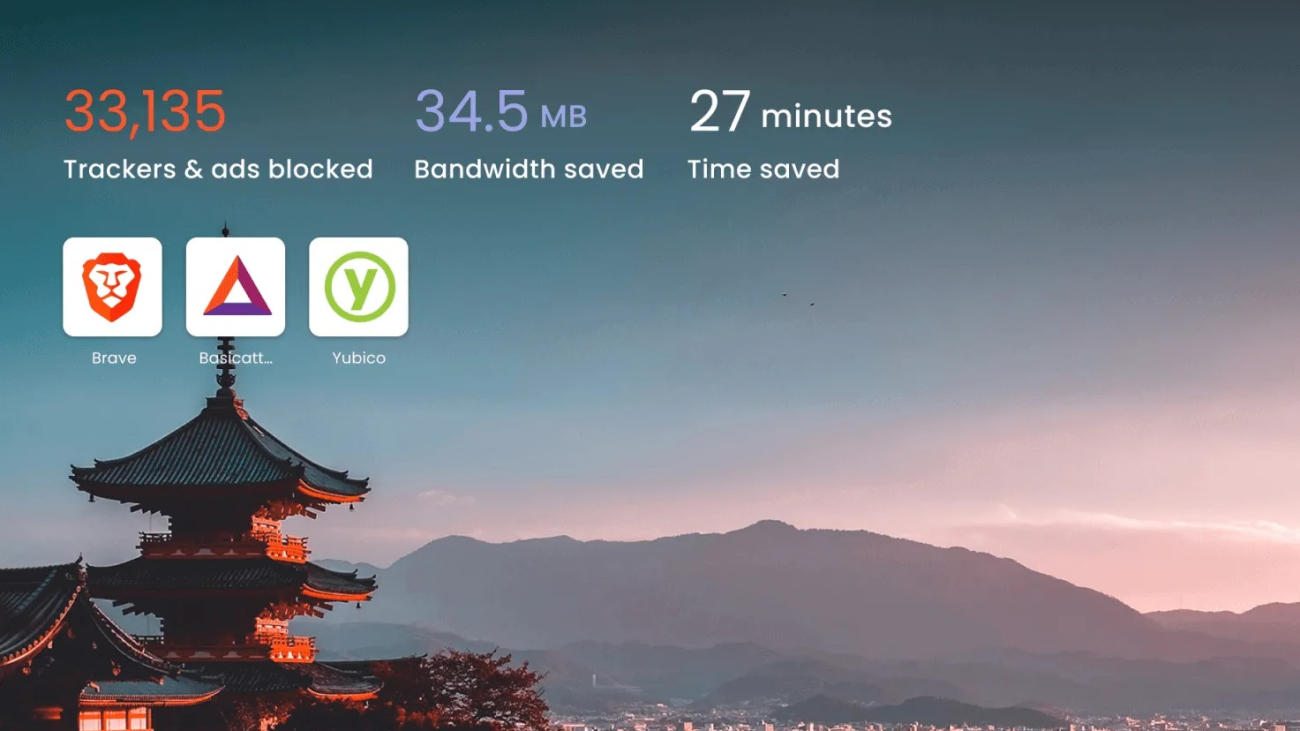
By default, Brave blocks the trackers & creepy ads on every website you visit. And that thing where ads follow you across the Web? We block that, too.


Online privacy made simple

All the good of ad-blocking, incognito windows, private search, even VPN. All in a single download.

Switch in 60 seconds

Quickly import bookmarks, extensions, even saved passwords. It’s the best of your old browser, only safer. And it only takes a minute to switch.


The new super app

Brave brings truly independent search, free video calls, offline playlists, even a customizable news feed. All fully private. All right to your browser super app.


Privacy you can see

No creepy ads & trackers means less stuff (visible or hidden) on the sites you visit. And that means faster page load, better battery life, even mobile data savings.


Online privacy by default: Brave vs. other browsers


Advanced features

Only here for the privacy? We got you. Just download and enjoy…
Want a more bespoke experience? Brave’s got great customizations, too:

Advanced security

Built-in IPFS integration, onion routing with Tor, custom filter lists, and more security features.

Brave Rewards

Earn crypto tokens for your attention by opting in to privacy-preserving, first-party ads.

Crypto wallet

A secure, browser-native wallet to buy, store, send, and swap your crypto assets.


Is the Brave Browser safe?

Brave is one of the safest browsers on the market today. It blocks privacy-invasive ads & trackers. It blocks third-party data storage. It protects from browser fingerprinting. It upgrades every webpage possible to secure https connections. And it does all this by default.

It’s also built off the open-source Chromium Web core, which powers browsers used by billions of people worldwide. This source code is arguably vetted by more security researchers than any other browser. In short, not only is Brave safe to use, it’s much safer than almost any other browser. Learn more.

How do I download & install Brave?

Brave is available on nearly all desktop computers (Windows, macOS, Linux) and nearly every mobile device (Android and iOS). To get started, simply download the Brave browser for desktop, for Android, or for iOS.

Does Brave have a VPN?

Yes! Brave Firewall + VPN protects everything you do online, on your entire device, even outside the Brave Browser. It’s currently available for Android and iOS mobile devices, and will be available on desktop in the very near future.

What languages is Brave available in?

The Brave Browser is available in nearly 160 languages in all, including four different dialects of Chinese. Brave Search is currently available in English, French, German, Japanese, and Spanish, with support for many more languages coming soon.

Who owns Brave?

The Brave Browser, Brave Search, and all their various features are made by Brave Software Inc, an independent, privately-held company. Brave is not beholden to any other tech company, and works every single day to fight Big Tech’s terrible privacy abuses. Brave exists to help real people, not some faceless tech company.

Is Brave open source?

Yes. The Brave Browser is built on the open-source Chromium Web core and our own client code is released under the Mozilla Public License 2.0.

How does Brave compare to Chrome?

Simply put, the Brave Browser is 3x faster than Google Chrome. By blocking all privacy-invading ads & trackers by default, there’s less stuff to load on every single webpage you visit. That means pages load much faster, saving you time, money, and battery life. It also means you’re much safer online. Learn more.

Is Brave free?

Yes, Brave is completely free to use. Simply download the Brave browser for desktop, for Android, or for iOS to get started. You can also use Brave Search free from any browser at search.brave.com, or set it as your default search engine.

Brave also has some great, subscription-based features, including Brave Talk Premium and Brave Firewall + VPN.

What is BAT, and how do I earn it?

BAT is short for Basic Attention Token. BAT is a crypto asset, and a key (but totally optional) part of the Brave Rewards ecosystem. Here’s how it works:

Brave Rewards gives you the option to view first-party, privacy-protecting ads while you browse (these ads are from the Brave Private Ads network). If you choose to view them, you earn BAT, via the Brave Rewards program.

You can keep BAT like any other crypto asset, or use it to tip the content publishers you love. Brave even gives you a secure way to store BAT (and any other crypto asset), with Brave Wallet. And, again, Brave Rewards is a totally optional program.

Other tech companies steal your data to sell ads—to them, you are the product. Brave is different. We think your attention is valuable (and private!), and that you should get a fair share of the revenue for any advertising you choose to view. That fair share is rewarded in BAT.

Shopping Basket