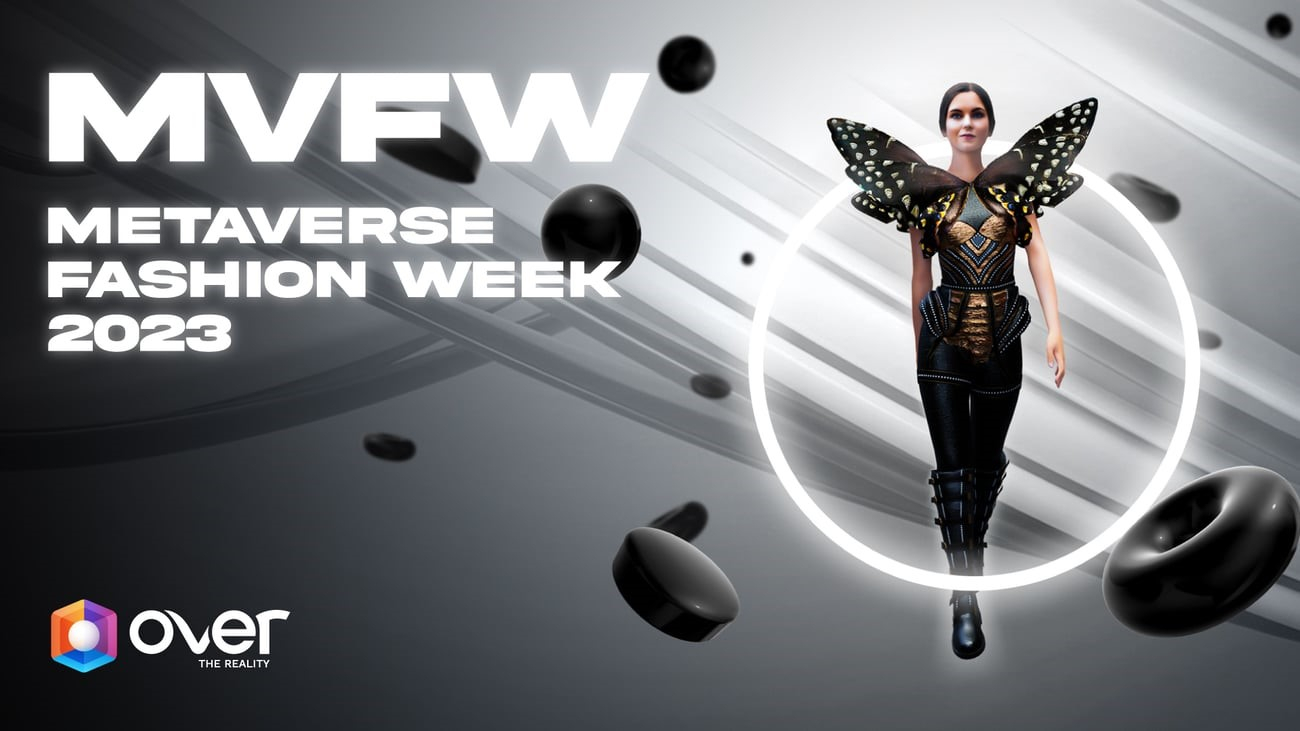
February and March are all about the major global fashion weeks. This year, March culminates with Metaverse Fashion Week. OVER is working tirelessly to organize an unprecedented MVFW and in February signed up some very special partners to make their AR-powered fashion gathering in Milan (March 28-31) a roaring success.
Be sure to follow OVER on socials, to make sure you don’t miss any updates on how AR technology is taking fashion to the next level.
Don’t be fooled by its emptiness: Block 776,339 plays as important a role as busier blocks in the Bitcoin blockchain.
Bitcoin is known for its robustness, security and predictability. Every 10 minutes — on average — the blockchain produces a new block, and the successful miner earns a block reward of 6.25 Bitcoin (BTC), around $130,000.
However, every once in a while, the Bitcoin blockchain surprises observers and participants.
At block height 776,339, nodes across the network verified a completely empty block. The block was added to the Bitcoin blockchain with zero included transactions, leading to some confusion among the crypto community. So, what exactly is an empty block, and how does it happen?
Block expectation vs. reality. Source: Mempool.space
First, while an empty block might seem strange at first, it’s actually a normal occurrence on the network. The last time it occurred was a little over two weeks ago, in block 774,486.
Miners are incentivized to mine blocks as quickly as possible, and sometimes, they mine a block before they have received any transactions to include. When this happens, the block remains empty.
The Bitcoin mempool, the go-to space for analyzing the Bitcoin blockchain, offers the following explanation: “When a new block is found, mining pools send miners a block template with no transactions so they can start searching for the next block as soon as possible. They send a block template full of transactions right afterward, but a full block template is a bigger data transfer and takes slightly longer to reach miners.”
“In this intervening time, which is usually no more than 1–2 seconds, miners sometimes get lucky and find a new block using the empty block template.”
In essence, the miners “got lucky” by mining a template. In this instance, the Bitcoin block at height 776,389 was added mere seconds after its predecessor, 776,488. However, block 776,388 earned an extra 0.086 BTC or $1,854 in fees, which was added to the block reward of 6.25 BTC or $135,247.
Even though an empty block doesn’t contain any transactions, the miner still receives the block reward of the newly minted Bitcoin. As such, block 776,389 was awarded 6.25 BTC — no transaction fees. Binance Pool was the winning miner, which contributes as much as 12% to the total hash rate.
Bitcoin mining pool ranking. Source: Mempool.space
It’s important to note that empty blocks are not a problem for the network. By mining empty blocks, miners still produce the coin generation transaction, also known as the coinbase transaction, which keeps Bitcoin steady on its path to reaching 21 million BTC issued.
Related: Public miners increased Bitcoin production, hash rate in January
According to data from BitInfoCharts, the percentage of empty blocks on the network is usually around 1%–2%. The stat is more surprising today, given the rise of “ordinals” on Bitcoin, or the ability to permanently etch pictures, data and stamps onto the blockchain.
The rise in ordinals has provoked some questions and even concern among the Bitcoin community, and the first instances of pornography were recently recorded. The mempool has been increasingly busy, and block space has been contested for as some JPEG enthusiasts scramble to contribute their art to the Bitcoin blockchain.
Robert Kiyosaki, a prominent investor and author of the best-selling personal finance book “Rich Dad, Poor Dad.” has shared his view after American billionaire Charlie Munger’s call for a ban on cryptocurrencies such as Bitcoin (BTC).
Kiyosaki pointed out that while Munger may still advocate for stocks and traditional finance systems, the younger generation is embracing cryptocurrencies because of the legitimacy of their accounting system, he said during an interview with Stansberry Research on February 18.
The renowned financial educator stated that Munger’s pessimism towards cryptocurrencies could be linked to his alignment with the ‘the FED treasury Wall Street crowd!
Kiyosaki further opined that focus should not be placed on the price movement of cryptocurrencies but on the underlying technology.
“Charlie would probably still say buy stocks, but the reason I like cryptos, not Bitcoin, is because of blockchain, and blockchain is an accounting system. It’s more legitimate than the fed or the treasury or Wall Street, so Charlie Munger is in the FED treasury Wall Street crowd, and the younger generations, millennials and below, are in the iPhone crowd,” said Kiyosaki.
Kiyosaki’s comments come in response to Munger’s earlier statement in which the Berkshire Hathaway (NYSE: BRK.A vice chairman extended his criticism of Bitcoin while suggesting that people who oppose outlawing digital assets are ‘idiots’. He added that it’s ‘just ridiculous’ anybody would invest in crypto.
Interestingly, the 99-year-old Munger stated that he was not proud of the U.S. authorities for permitting cryptocurrencies.
Bitcoin NFTs will have a positive impact on Bitcoin ecosystem by improving its security and incentivizing developers to build on the network, according to independent developer Udi Wertheimer.
The number of newly created Ordinals, also referred to as
“inscriptions”, have been spiking in recent weeks, causing a surge in transaction fees and average block size on the Bitcoin blockchain.
According to Wertheimer, Bitcoin NFTs are going to be beneficial for Bitcoin’s security budget: by driving up transaction fees, the creation of Ordinals will incentivize miners to secure the network while the revenue from mining reward will be decreasing with each Bitcoin halving.
“Because the block space is scarce and because there’s demand for stuff like inscriptions, there’s a lot of hope that we will get enough people who want to pay fees in order to keep the Bitcoin network secure, Werthermer explained in a recent interview with Cointelegraph.
Also, Wertheimer noted, Ordinals provide a new use case that will make building on Bitcoin commercially profitable.
“With all of that interest around Ordinals and inscriptions, I expect that there is going to be a very big ecosystem that is built around that, he said.
Wertheimer dismisses the notion, held by some Bitcoin core developers, that creating NFTs is not an appropriate use case for Bitcoin. According to him, in recent years Bitcoin core developers “have ignored what actual Bitcoin users want.”
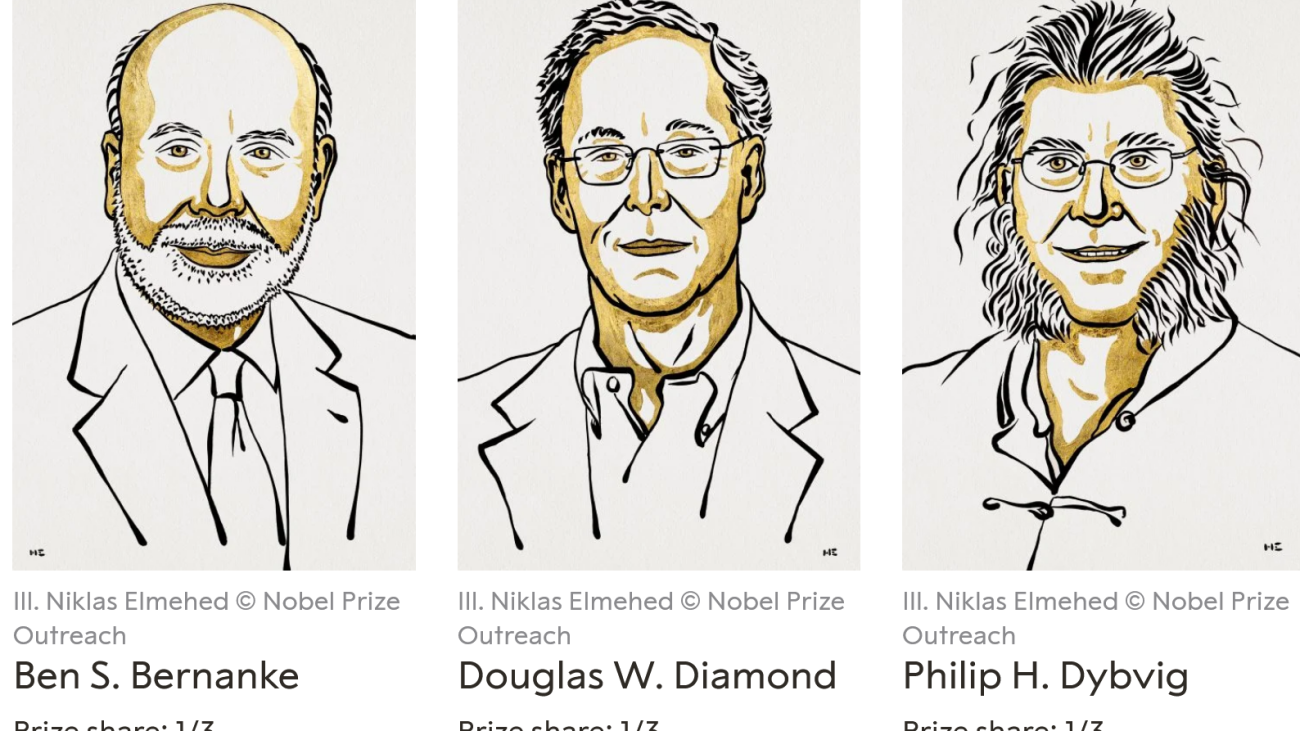
The Sveriges Riksbank Prize in Economic Sciences in Memory of Alfred Nobel 2022 was awarded jointly to Ben S. Bernanke, Douglas W. Diamond and Philip H. Dybvig “for research on banks and financial crises” explained briefly below:What is the role of banks in the economy and society? What happens if they collapse?
The foundations of modern banking research were laid by Ben Bernanke, Douglas Diamond and Philip Dybvig in the early 1980s. Through statistical analysis and historical source research, Bernanke demonstrated how failing banks played a decisive role in the global depression of the 1930s. Bernanke’s research shows that bank crises can potentially have catastrophic consequences. This insight illustrates the importance of well-functioning bank regulation.
Ben Bernanke
Ben S. Bernanke – Nobel Prize in Economic Sciences
Solana Mobile, a subsidiary of Solana Labs, introduced Saga, a flagship Android mobile phone with unique functionality and features tightly integrated with the Solana blockchain making it easy and secure to transact in web3 and manage digital assets, such as tokens and NFTs.
“Almost 7 billion people use smartphones around the world and more than 100 million people hold digital assets – and both of those numbers will continue to grow,” said Anatoly Yakovenko, co-founder of Solana, the world’s most performant blockchain. “Saga sets a new standard for the web3 experience on mobile.”
Saga was introduced at an event in New York today, which also included the introduction of the Solana Mobile Stack, a framework for Android allowing developers to create rich mobile experiences for wallets and apps on Solana and create a “Secure Element” for private key management (read more here). The Solana Mobile Stack SDK is available to developers now and Saga is available for pre-orders starting today, with delivery in early 2023.
“We chose the Saga name because the story of crypto is still being written,” said Raj Gokal, co-founder of Solana. “This is the next chapter of this narrative and we believe opening up crypto to mobile will lead to greater adoption, better understanding, and more opportunities.”
Saga is designed and manufactured by OSOM, a leading Android development company whose team has extensive experience building computing hardware for Google, Apple, and Intel, among others.
“Saga starts from first principles to create a mobile experience for individuals, developers, and ecosystem participants that opens a new era of mobility,” said Jason Keats, co-founder and CEO of OSOM. “The world needs novel hardware to embrace the future that is web3, and building out an ecosystem that looks to the future without being burdened by past legacy ecosystems is hugely exciting for us.”
Saga includes a 6.67″ OLED display, 12 GB RAM, 512 GB storage, and the latest flagship Snapdragon® 8+ Gen 1 Mobile Platform, the security features of which will enable the Solana Mobile Stack’s Seed Vault. With the addition of a Secure Element built into the device, the Seed Vault keeps private keys, seed phrases and secrets separated from the application layer yet still capable of interacting with apps running on the device or in a mobile browser.
Pre-orders for Saga require a $100 fully refundable deposit, which will be applied to the anticipated final cost of $1,000, and will be prioritized for developers in order to test the Solana Mobile Stack and Saga. Those who pre-order may be eligible to receive a Saga Pass, an NFT accompanying the first wave of Saga devices and the first ticket to influencing the direction of the SMS platform.
Solana Mobile is a mobile technology company developing the Solana Mobile Stack and Saga. It is a subsidiary of Solana Labs, a creator of open source software, and a contributor to Solana software and the Solana protocol. For more information, please visit https://solanamobile.com/.
Pre-order FAQs
How does the waitlist work?
To reserve your spot on the waitlist, enter your information, connect your wallet and make a $100 USDC refundable deposit. Once payment is complete, you’ll be added to the waitlist and be notified once it’s time to complete your order.
How much is the deposit for Saga?
Getting on the waitlist for Saga requires a $100 USDC deposit. The deposit amount will be deducted from the final purchase price of the Saga device. All deposits are refundable.
Do developers get early access?
Yes they do — certain developers will receive priority on the waitlist. Developers are needed to test Solana Mobile Stack and Saga. At checkout, make sure to fill in your developer details.
Where will Saga be available?
Saga will be available in the US, CA, EU, UK, CH, AU and NZ to start.
When will I get updates on Saga?
We’ll send email updates about Saga and its release date to the email you provide. Those who pay for a pre-order may be eligible to receive a Saga Pass, an NFT accompanying the first wave of Saga devices and the first ticket to influencing the direction of the Solana Mobile Stack platform.
Will the Solana phone have the Google Play store and all its apps?
Yes, Saga is fully Google Mobile Services enabled and will carry the Google Play Store and the core Google apps alongside the Solana dApp Store.
Snapdragon is a trademark or registered trademark of Qualcomm Incorporated.
Snapdragon is a product of Qualcomm Technologies, Inc. and/or its subsidiaries.
After Google Cloud announced that it would offer a product called the “Blockchain Node Engine” and further noted that Ethereum would be the first blockchain supported, the company revealed it was running a Solana validator on Nov. 5, 2022. Google said that the cloud division is currently working with Solana in order to bring the firm’s Blockchain Node Engine to the Solana chain.
Google Is Operating a Block-Producing Solana Validator, Firm’s Cloud Division Aims to Add Solana to Blockchain Node Engine’s Supported Blockchains in 2023
Google is stepping toward other blockchains after revealing the Blockchain Node Engine at the end of October. According to a tweet from Google Cloud’s official Twitter account, the firm is already running a Solana validator. “Google Cloud is running a block-producing [Solana] validator to participate in and validate the network,” the company tweeted. The company added:
Google Cloud is working with [Solana] to bring Blockchain Node Engine to the Solana chain next year, so it will be easy for anyone to launch a dedicated Solana node in the cloud.
In addition to bringing Blockchain Node Engine support to Solana, Google Cloud will be indexing the Solana blockchain and bringing the data to “Big Query” next year. The goal is to “make it easier for the Solana developer ecosystem to access historical data.” Solana’s native token solana (SOL) jumped in value on the announcement and SOL is up 7.8% higher against the U.S. dollar this week.
However, not everyone was thrilled about Google’s mission to host Solana nodes in the cloud. “This … Is not a good thing. More and more centralization. This is like the opposite point of crypto,” one person criticized in the Google Cloud announcement thread on Twitter. Another individual agreed with the person’s critique and replied: “Crypto went full redacted in 2017. People now celebrate centralized and custodial services because it makes number go up.”
Now, more than 2 million Unstoppable domains can be used to easily build decentralized websites that are fully functional on Brave
We’re excited to announce that more than 2 million Unstoppable domains can now be used to display decentralized websites in Brave, a secure and privacy-centric browser that allows you to explore the Internet without being tracked. Through the Unstoppable Domains integration with Brave, creators can build decentralized content with a domain that they fully own and control – or explore the nearly 30,000 websites and counting that have been created using an Unstoppable domain. Now, we’re deepening our integration beyond .crypto to include more top-level domains – including .nft, .x, .wallet, .bitcoin, .blockchain, and .dao.
Over the past 50 years, the Internet has transformed our world and the way we communicate. But today, most people still surf the Internet using Web2 addresses that are rented, not owned. With Brave and Unstoppable Domains, launching a decentralized website couldn’t be easier, giving people an alternative to renting Web2 domains. Unstoppable domains are yours for life with no renewal fees, eliminating the risk of losing a domain because you forget to renew or because the registrar takes it away.
“Together with Unstoppable, we’re giving more people the power to create content and explore the Internet without sacrificing their privacy or their autonomy,” said Brendan Eich, CEO and co-founder of Brave. “We’re excited to expand access to the decentralized Web for our 60 million users and to contribute to a privacy-first Internet where people have ownership of their data.”
“Web3 is the future, and with Brave, we’re expanding access to the decentralized Web and giving people more ways to build their identity online,” said Sandy Carter, SVP and Channel Chief of Unstoppable Domains. “Brave’s Web3-ready browser makes it possible to build websites that are fully owned by people, not rented from big tech companies.”
Through the Brave integration with Unstoppable Domains, domains like Sandy.nft and Brad.crypto function just like normal Web2 addresses, but are hosted on the InterPlanetary File System (IPFS), a decentralized, peer-to-peer network. Brave offers a Web3-ready browser with native support for IPFS—meaning you don’t need to take any additional steps, or download any additional software, to access decentralized sites. Navigating to an IPFS URL is as simple as clicking a link or pasting it into the Brave browser’s address bar. Native support for IPFS is a key piece of infrastructure to offer truly decentralized websites where both the domain and Web content are owned entirely by the user and distributed across a network of nodes.
One domain, endless possibilities
An Unstoppable domain is your identity for Web3 – you can use it to receive cryptocurrency payments, log in seamlessly to apps, to send and receive emails, and now, to build your Web3 presence via a personal website. Creators can now build their identity on Web3 by creating a decentralized website with any Unstoppable domain.
With Unstoppable Domains and Brave, you can:
Build a personal blog or thought leader post (TimDraper.crypto)
Launch your NFT and create content for your community (DeadHeads.NFT)
Inspire the future of gaming (bizesports.x)
Build educational content and showcase your passions (Hashoshi.crypto)
Advocate and gather your community in one place (UnstoppableWow3.x)
Showcase your crypto podcast (0xJosh.NFT)
Create a platform to share your knowledge with the world (CryptoMoonWalkers.x)
Build your decentralized website
Interested in building your own decentralized website? Start by minting your Unstoppable domain. Once your domain is minted, you can add an existing IPFS hash, upload HTML directly from the Unstoppable Domains site, or create a new website through Web3 web builders such as Pazly. Then, you’re ready to launch a Web3 site and use it as your personal website or a decentralized backup to your Web2 site. There’s no fee to publish a website with your NFT domain – Unstoppable covers gas fees for hosting. You also don’t have to pay for a separate hosting company, which can cost up to $200 per year in the Web2 space. Learn more at Changetheweb.x – be sure to use the Brave browser to access.
We’re focused on building utility for NFT domains – Unstoppable Domains recently launched a new mobile app for Web3 identity management, integrated with Skiff to give domain holders end-to-end encrypted email, and now, we’re making it even easier to use your domain to build a personal website. We’re thrilled to take this step towards a more decentralized web and to help more people build their Web3 identity.