Diversity of decentralized areas in the world of cryptocurrencies

Diversity of decentralized areas in the world of cryptocurrencies

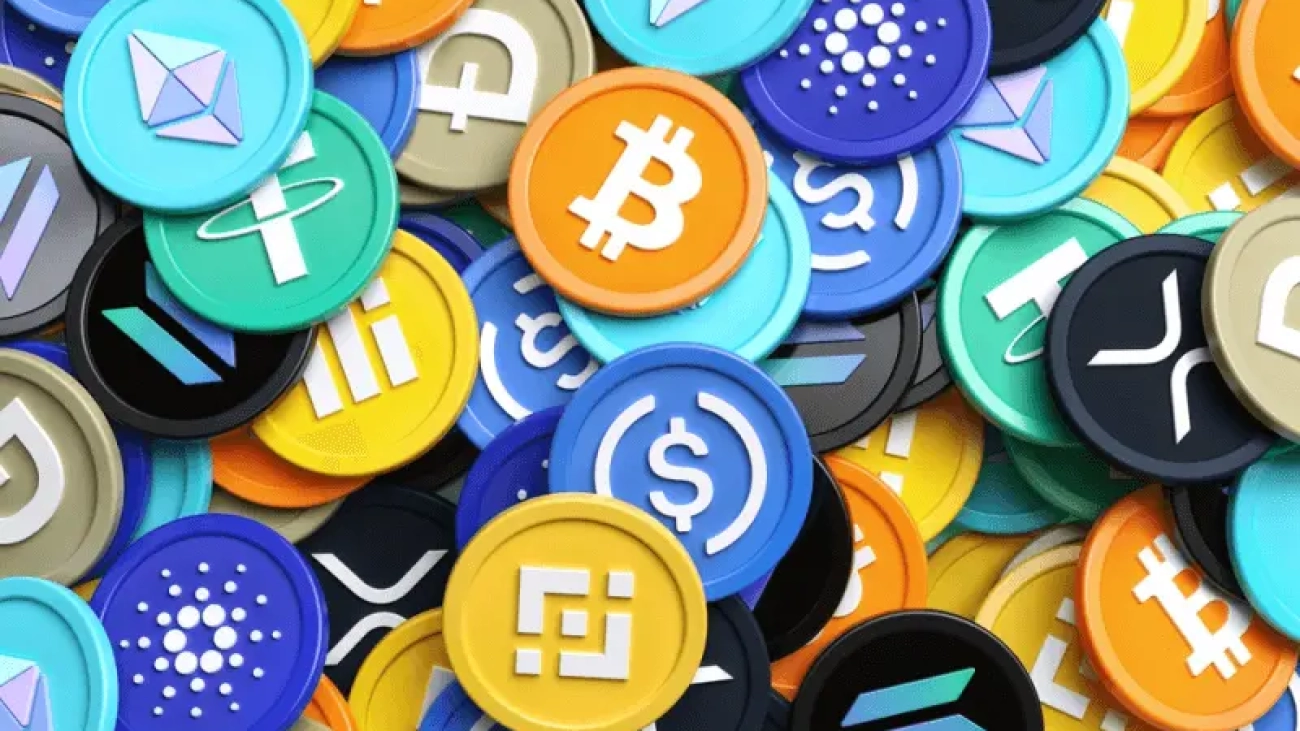
Cryptocurrencies and tokens are no longer just some internet money. Their areas of performance and services have expanded so that today we face the emergence and activity of cryptographic projects in various fields, from artificial intelligence and the advertising industry to the world of music and sports fandom.

Coins

Cryptocurrencies with their own blockchain, which are also called Layer1.

Layer2 cryptocurrencies

The purpose of each layer2 is to solve a problem in the Ethereum blockchain.

  • Polygon Matic – MATIC
  • Optimism – OP
  • Boba Network – BOBA

Layer2 projects

Which do not have a functional token or cryptocurrency.

  • Lightning Network (to solve the Bitcoin blockchain scalability problem)
  • Arbitrum One (to solve the Ethereum blockchain scalability problem )
  • ZKsync (on Ethereum blockchain)
  • STARKNET (on Ethereum blockchain)

Blockchains and tokens of artificial intelligence and the Internet of Things

  • IoTex – IOTX
  • Hedera Hashgraph – HBAR

Advertising industry and music industry tokens

  • Basic Attention Token – BAT
  • Audius – AUDIO

Web3 live broadcast

  • Livepeer – LPT Livepeer – LPT
  • Shiller (currently no cryptocurrency)

Web3 domains

  • Unstoppable Domains

Cryptocurrencies of centralized and decentralized exchanges

  • Binance Coin – BNB
  • FTX Token – FTT
  • WOO Network – WOO
  • Pancake Swap – CAKE
  • Uniswap – UNI
  • dYdX – DYDX

Cryptocurrencies Metaverse (3D virtual networks with virtual reality technology VR and augmented reality AR) and game (gaming)

Decentralized media and data Storage and File Sharing (IPFS)

Sports fan tokens

  • Chiliz – CHZ
  • Juventus – JUV
  • AC Milan – ACM
  • FC Barcelona – BAR
  • Atletico Madrid – ATM
  • Paris Saint-Germain – PSG
  • Manchester City – CITY

Tokens of the real estate industry

  • Landshare – LAND
  • LandOrc – LORC

Tokenized stocks

  • Google tokenized stock – GOOGL
  • Tokenized shares of Facebook – FB
  • Tokenized shares of Apple – AAPL
  • Tesla tokenized shares – TSLA
  • Tokenized shares of Twitter – TWTR
  • Amazon tokenized stock – AMZN
  • PayPal Tokenized Shares – PYPL
  • S&P 500 tokenized stocks – SPY
  • MicroStrategy tokenized shares – MSTR
  • Nvidia’s tokenized shares – NVDA
  • Tokenized shares of Alibaba – BABA
  • Advanced Micro Devices tokenized stock – AMD
  • Uber tokenized stock – UBER
  • Square tokenized shares – SQ
  • Netflix tokenized shares – NFLX
Digital and virtual asset firms in Ras Al Khaimah

Digital and virtual asset firms in Ras Al Khaimah

Free-trade zones in the UAE are areas where entrepreneurs have 100% ownership of their businesses and have different regulatory frameworks and tax schemes.

Ras Al Khaimah, one of the United Arab Emirate’s (UAE) seven Emirates, is set to launch a free zone for digital and virtual asset companies as the country’s approach to the industry continues to attract global crypto players.

The RAK Digital Assets Oasis (RAK DAO) will be a “purpose-built, innovation-enabling free zone for non-regulated activities in the virtual assets sector.” Applications will open in the second quarter of 2023, the statement said.

The free zone will be dedicated to digital and virtual assets service providers in emerging technologies, such as the metaverse, blockchain, utility tokens, virtual asset wallets, nonfungible tokens (NFTs), decentralized autonomous organizations (DAOs), decentralized applications (DApps) and other Web3-related businesses.

“We are building the free zone of the future for companies of the future,” said Sheikh Mohammed bin Humaid bin Abdullah Al Qasimi, chairman of the RAK International Corporate Centre, the operator of the new free zone. “As the world’s first free zone solely dedicated to digital and virtual asset companies, we look forward to supporting the ambitions of entrepreneurs from around the world.”

Free zones or free-trade zones are areas where entrepreneurs have 100% ownership of their businesses and have their own tax schemes and regulatory frameworks, except for the UAE’s criminal law.

Drawing up the new free zone’s steps, Dubai-based crypto lawyer Irina Heaver thinks “RAK DAO will start with non-financial activities first, then may introduce the financial activities at a later stage.” She added:

“[Entrepreneurs] won’t be able to launch a crypto exchange just yet, which is an ESCA-regulated financial activity.”

The Securities and Commodities Authority (SCA) is one of the UAE’s main financial regulators. According to the country’s latest federal-level virtual assets law, the SCA has authority throughout the Emirates, except for the financial free zones — the Abu Dhabi Global Market (ADGM) and Dubai International Financial Centre (DIFC) and others, which have their own financial regulators.

The new free zone adds to the more than 40 multidisciplinary free zones in the country that have attracted numerous crypto, blockchain and Web3 firms, including the Dubai Multi Commodities Centre (DMCC), DIFC and the ADGM.

The UAE has painted itself as a forward-thinking hub for crypto firms eyeing jurisdictions with friendlier regulations. In March 2022, Dubai unveiled its virtual assets law, along with the Virtual Asset Regulatory Authority, to protect investors and provide standards for the digital asset industry.

In September 2022, the Financial Services Regulatory Authority — the regulator of the ADGM — published guiding principles on its approach to regulating and overseeing the new asset class and its service providers.

Metaverse Fashion Week MVFW by OVER

Metaverse Fashion Week is on its way

February and March are all about the major global fashion weeks. This year, March culminates with Metaverse Fashion Week. OVER is working tirelessly to organize an unprecedented MVFW and in February signed up some very special partners to make their AR-powered fashion gathering in Milan (March 28-31) a roaring success.

Be sure to follow OVER on socials, to make sure you don’t miss any updates on how AR technology is taking fashion to the next level.

Tips For Managing Losing Trades

Tips For Managing Losing Trades

Losing trades happen. They are apart of the journey. There is simply no such thing as a trader or investor who wins all the time. All the famous investors or traders you know have LOST many times in their career. It is perfectly normal. Did you know the famed hedge fund manager Ray Dalio lost everything in his 30s? He went broke. He had to start over from scratch.

This post will address what losing trades really mean and how to deal with it.

Before we begin, let us state the obvious:

– Be careful of people who claim they don’t lose.
– Avoid people who flaunt win rates or success rates that are simply not possible.
– Losing trades happen to everyone! You are not alone.

Now, let’s talk about what bad trades mean and 5 tips for managing them:

Number 1: A losing trade is different from a bad trade

The most experienced traders are well aware of their risk before they ever place a trade. Each losing trade is a small component of a bigger process that relates to a system, plan or strategy that has been thoroughly tested and studied. A losing trade is a calculated event for experienced traders. They defined their risk, position size, stop loss, and profit target.

A bad trade is very different. A bad trade implies someone risked their hard earned money with no plan or process. A bad trade is reckless and indiscriminate trading. This often happens to new investors or traders who do not yet understand the time, studying, and research that goes into making a rock solid plan. Be sure to remember the difference between a calculated losing trade and a bad trade with no plan or process.

There are several ways to get started with a plan, system or process. Paper trading, backtesting and/or working with proficient traders who give valuable feedback are all ways to get started. Don’t risk your money without first doing research.

Number 2: Every losing trade provides data to get better

As we’ve mentioned several times now, losing trades happen to everyone. But remember, losing trades are also filled with insightful information and data. You can learn a lot from analyzing losing trades.

At the end of each trading day, week or month, experienced traders will analyze their losing trades in detail. What patterns are appearing? What do they share in common? Why did they happen? With this information, a trader or investor can adjust their strategy based on what they’ve uncovered.

Number 3: Do not let losing trades impact your health

Your mental and physical health are just as important as your financial health. Do not let losing trades impact either of those.

If your system is breaking down or several losing trades are starting to impact your emotions, step away from the computer or phone. Turn everything off and walk away. The markets have been open for hundreds of years and are not going away. When you’re ready to come back, they’ll be there.

Get up, get some fresh air, and get back in the arena when you’re ready.

Number 4: Share your experiences with others

Traders and investors across the globe want to learn from your stories and losing trades. These are invaluable experiences that we all share in common. Social networks allow you to chat, share, and meet people who are going through similar things. We can all learn from each other.

Sure, the temptation to share your winners or act like the best trader who ever existed is tempting – but it’s clear we learn together and get better when we share lessons from the loses. This is where the deepest insights are found, and together, it’s where we can grow as a community of traders all trying to outperform the market.

Share and ask for constructive feedback!

Number 5: Keep Going

Markets are a game of learning, relearning, and progressing forward. New themes, trends, and stories appear and disappear daily. The journey is long and it never stops. When implementing your trading plan or investing plan, it’s important to do it with the long-term in mind. One or two losing trades in a single day or week is a small fraction of what’s to come many months and years down the road.

Keep going. Keep building. Keep refining your plan. Study the data.

We hope you enjoyed this post!

We hope you learned something new or informative!

Please leave any comments below and our team will read them.

Web 3.0

Web 3.0

Web3 (also known as Web 3.0) is an idea for a new iteration of the World Wide Web which incorporates concepts such as decentralization, blockchain technologies, and token-based economics. Some technologists and journalists have contrasted it with Web 2.0, wherein they say data and content are centralized in a small group of companies sometimes referred to as “Big Tech”. The term “Web3” was coined in 2014 by Ethereum co-founder Gavin Wood, and the idea gained interest in 2021 from cryptocurrency enthusiasts, large technology companies, and venture capital firms.

Some commentators argue that Web3 will provide increased data security, scalability, and privacy for users and combat the influence of large technology companies. They also raise concerns about the decentralized web component of Web3, citing the potential for low moderation and the proliferation of harmful content. Some have expressed concerns over the centralization of wealth to a small group of investors and individuals, or a loss of privacy due to more expansive data collection. Others, such as Elon Musk and Jack Dorsey, have argued that Web3 only serves as a buzzword or marketing term.

Empty Bitcoin block found

Empty Bitcoin block found

Don’t be fooled by its emptiness: Block 776,339 plays as important a role as busier blocks in the Bitcoin blockchain.

Bitcoin is known for its robustness, security and predictability. Every 10 minutes — on average — the blockchain produces a new block, and the successful miner earns a block reward of 6.25 Bitcoin (BTC), around $130,000.

However, every once in a while, the Bitcoin blockchain surprises observers and participants.

At block height 776,339, nodes across the network verified a completely empty block. The block was added to the Bitcoin blockchain with zero included transactions, leading to some confusion among the crypto community. So, what exactly is an empty block, and how does it happen?

Block expectation vs. reality. Source: Mempool.space

First, while an empty block might seem strange at first, it’s actually a normal occurrence on the network. The last time it occurred was a little over two weeks ago, in block 774,486.

Miners are incentivized to mine blocks as quickly as possible, and sometimes, they mine a block before they have received any transactions to include. When this happens, the block remains empty.

The Bitcoin mempool, the go-to space for analyzing the Bitcoin blockchain, offers the following explanation: “When a new block is found, mining pools send miners a block template with no transactions so they can start searching for the next block as soon as possible. They send a block template full of transactions right afterward, but a full block template is a bigger data transfer and takes slightly longer to reach miners.”

“In this intervening time, which is usually no more than 1–2 seconds, miners sometimes get lucky and find a new block using the empty block template.”

In essence, the miners “got lucky” by mining a template. In this instance, the Bitcoin block at height 776,389 was added mere seconds after its predecessor, 776,488. ‎However, block 776,388 earned an extra 0.086 BTC or $1,854 in fees, which was added to the block reward of ‎6.25 BTC or $135,247.

Even though an empty block doesn’t contain any transactions, the miner still receives the block reward of the newly minted Bitcoin. As such, block 776,389 was awarded 6.25 BTC — no transaction fees. Binance Pool was the winning miner, which contributes as much as 12% to the total hash rate.

Bitcoin mining pool ranking. Source: Mempool.space

It’s important to note that empty blocks are not a problem for the network. By mining empty blocks, miners still produce the coin generation transaction, also known as the coinbase transaction, which keeps Bitcoin steady on its path to reaching 21 million BTC issued.

Related: Public miners increased Bitcoin production, hash rate in January

According to data from BitInfoCharts, the percentage of empty blocks on the network is usually around 1%–2%. The stat is more surprising today, given the rise of “ordinals” on Bitcoin, or the ability to permanently etch pictures, data and stamps onto the blockchain.

The rise in ordinals has provoked some questions and even concern among the Bitcoin community, and the first instances of pornography were recently recorded. The mempool has been increasingly busy, and block space has been contested for as some JPEG enthusiasts scramble to contribute their art to the Bitcoin blockchain.

Metaverse

Metaverse

‍A metaverse is simply an alternate version of reality that exists digitally. A metaverse is a digital universe that contains all the aspects of the real world, such as real-time interactions and economies. It offers a unique experience to end-users. Much like the physical reality, people interact in this metaverse to work, play, do business, and socialize with other people and elements.

In science fiction, the “metaverse” is a hypothetical iteration of the Internet as a single, universal, and immersive virtual world that is facilitated by the use of virtual reality (VR) and augmented reality (AR) headsets. In colloquial usage, a “metaverse” is a network of 3D virtual worlds focused on social connection.

The term “metaverse” originated in the 1992 science fiction novel Snow Crash as a portmanteau of “meta” and “universe”. Metaverse development is often linked to advancing virtual reality technology due to the increasing demands for immersion. Recent interest in metaverse development is influenced by Web3, a concept for a decentralized iteration of the internet.

In practice, there are multiple existing metaverses today, and they can be referred to with different names and terms. The concept derives from “meta” which means “beyond” and “universe” which refers to all existing matter and space. So the term, “metaverse”, so to speak, goes beyond all that is visible and known to exist.

In the blockchain and crypto industry, many projects working in other emerging technologies, like artificial intelligence, expanded reality (VR and AR) and internet of things (IoT) create versions of their own digital realities. This is where the term metaverse is often used to describe an ecosystem where users of the platform can find every single element, creation, experience, and interaction in a shared, and most importantly, persistent space.

The concept of metaverse is gaining popularity in big tech companies as well. It is difficult to know its shape in general; however, it can be identified by some or all of these characteristics:

  • Persistence: In the metaverse, a persistent space is continuously shaped with environments that continue to grow and evolve regardless of whether or not users are connected to and interacting with them.
  • Real time: Experiences there happen in real time. This doesn’t necessarily mean live; however, pre-recorded performances can be triggered, for example, but users experience them in real time.
  • Economy: The metaverse has a fully functional economy. It uses a native, blockchain-based currency to buy, sell, or trade products and services in the metaverse.
  • Physical bridge: In augmented reality, the metaverse can exist alongside or even be linked to the physical universe. Think of an additional digital layer on top of or linked to actual geographical coordinates, for example. This is as opposed to virtual reality metaverses that only exist in a virtual realm.
  • Open content: One major pull for metaverses is that the content and experiences within, unlike previous versions of digital universes, can be created by corporations and users together. Users are, in fact, expected to eventually provide the majority of content in a metaverse as UGC.
How to Apply a Successful Risk management

How to Apply a Successful Risk management

Hey everyone!

While trading and investing offer the opportunity for profit, there is always the potential for loss. The most experienced traders know this best and in today’s post, we’re going to share several time-tested tips to help new traders and investors better understand financial risk and intelligent planning.

Develop a Trading Plan

• Many traders jump into the market without a thorough understanding of how it works and what it takes to be successful.
• You should have a detailed trading plan in place prior to engaging in any trades.
• Having a plan can help you stay calm under stress and ensure that you are trading within your risk tolerance.

Understand your risk tolerance

• Risk is subjective. Different traders have different personalities and systems, hence a different risk tolerance.
• There is no “One-size-fits-all” approach.
• Find out what suits your needs based on your account size, age, long-term plan, and other key variables that are specifically unique to your circumstances. Then, implement it accordingly.

Follow your trading system

• A trading system lays down a set of rules that can help a trader avoid impulsive decisions.
• A trading system is essential because it requires you to think deeply about your approach to markets before you begin risking real money.

• Traders should backtest and research their system under different market conditions. Ask yourself how you would perform in a bear market? Have you tried paper trading your system to see if it works? Have you discussed your system with others or asked for feedback?

• Some traders hop strategies after a series of losses. This usually leads to more losses and is unproductive in the long term.
• If your system has a verifiable edge, then sticking to it will help you in generating consistent returns over time. It will also help you stick to your original long-term plan as mentioned above.

Use a Stop-Loss

• A stop-loss order is an order that is placed at a predetermined price level and can help in limiting your losses if the trade goes against you. It’s also used to ensure you’re sticking to your original trading plan or trading system.
• In general, this predetermined price level is the level at which your trade idea gets invalidated.

Manage your position size

• It’s important to take an optimal position size so that there isn’t too much risk exposure in any given trade.
• Trading is a game of probabilities. Hence, a trader should never put all his eggs in one basket and if he does, then he should be well aware of it.

Don’t overtrade or revenge trade

• Although it can be tempting, it’s never a good idea to try to recoup the losses by taking higher risks.
• It’s easy to feel strong emotions while trading. However, making decisions based on emotions rather than rational analysis can be a recipe for disaster. If you fear that this is happening, walk away from your computer.

Maintain a trading journal

•A trading journal can help you in identifying the shortcomings in your trading.
• Evaluation of this journal at regular intervals will help you in understanding and in improving yourself. The trading journal is a tool to self-reflect on your journey.